Telescopic Conveyor Manufacturers in Bahadurgarh
A Telescopic Conveyor is a material handling system designed primarily for faster and more convenient loading and unloading of goods from trucks, containers and dock areas. Its main advantage over a fixed conveyor is its ability to extend and retract, bringing the conveying surface closer to the actual loading or unloading point.
For warehouses, distribution centres and industrial facilities handling cartons, boxes, bags, parcels and packaged products, this arrangement can reduce unnecessary walking and manual carrying. It can also help maintain a more organized movement of materials between vehicles and internal conveyor lines.
Saksham Industrial Engineers supplies Telescopic Conveyor solutions in Bahadurgarh with configurations that can be adapted according to the operating layout and material-handling requirement. The current product information identifies the equipment as a telescopic belt conveyor, with customizable design parameters such as length, belt width, load capacity and speed.
Key Features
-
Extendable and retractable design: The conveyor can be extended toward the vehicle or loading area and retracted when the operation is complete, making it practical where access distance changes.
-
Robust steel construction: The available design uses a mild steel or stainless steel structure, providing a suitable framework for industrial material handling.
-
Controlled belt movement: The belt is designed for smooth product movement, while variable speed control can be provided through a VFD where required.
-
Configurable dimensions: Length, belt width, height and load-handling requirements can be considered according to the application and installation layout.
-
Safety and control provisions: Integrated control and safety arrangements can be incorporated to support controlled operation and safer material movement.
Construction & Design
The conveyor is built around a telescopic framework that allows the conveying section to move inward and outward. The structure can be manufactured using mild steel or stainless steel, depending on the required configuration and operating environment.
The conveying surface uses PVC, rubber or PU belt options according to the product and application requirements specified during design. A geared motor drive provides the belt drive arrangement, while VFD-based speed control can be incorporated where variable operating speed is required. The published product information specifies a 415V/50Hz power supply configuration.
The overall arrangement can be configured around the available dock, vehicle dimensions and material flow. Where required, options such as height adjustment, swivelling heads, lighting and automation controls can be considered as part of the system configuration.
Working Process
The operating principle is straightforward:
-
Positioning: The conveyor is positioned at the loading or unloading dock and aligned with the vehicle or container.
-
Extension: The telescopic section is extended toward the required working position inside or near the vehicle.
-
Belt operation: Once positioned, the belt is started through the control system and moves material along the conveyor.
-
Material transfer: Operators place cartons, bags, boxes, parcels or other suitable packaged goods onto the moving belt for transfer between the vehicle and the receiving point.
-
Controlled movement: Conveyor speed can be adjusted where variable-speed control is provided, allowing the operating rate to suit the handling process.
-
Retraction: After loading or unloading, the telescopic section can be retracted to its compact position.
This arrangement allows the conveyor to follow the changing distance between the dock and the material inside a vehicle instead of requiring operators to repeatedly carry goods over that distance.
Industrial Applications
A Telescopic Conveyor is particularly useful where trucks or containers are loaded and unloaded frequently. In a warehouse, it can extend into a vehicle so cartons or parcels can be transferred closer to the operator instead of being manually carried over a long distance.
In distribution and logistics operations, it can support the movement of packaged goods between vehicles and fixed conveyor systems. For FMCG and manufacturing facilities, it can be used for handling finished products, boxes, bags and other packaged materials during dispatch or receiving activities.
The system is also suitable for operations where different vehicle sizes or dock-to-vehicle distances make a fixed conveyor less flexible.
Industries Served
Relevant applications include:
-
Logistics and distribution centres
-
Warehousing and storage facilities
-
E-commerce and parcel handling operations
-
Courier and dispatch facilities
-
FMCG operations
-
Food and beverage handling
-
Pharmaceutical operations
-
General manufacturing and packaged-goods handling
The product page specifically identifies logistics, warehousing, distribution, e-commerce, courier services, FMCG, food and beverage, pharmaceuticals and manufacturing among its application areas.
Key Benefits
The practical value of the conveyor comes from bringing the material-handling point closer to the load. This can help reduce manual carrying and operator fatigue during repetitive loading and unloading work.
Its extendable configuration provides greater flexibility than a conventional fixed conveyor when vehicle positions and internal loading distances vary. Controlled belt movement can help maintain a consistent material flow, while integration with existing conveyor arrangements can support a more continuous handling process.
The system can also help reduce unnecessary product handling, particularly where goods would otherwise need to be repeatedly moved by hand between the vehicle and dock.
Performance & Reliability
Reliable operation depends on selecting the correct belt, structure, drive arrangement, load capacity and dimensions for the intended application. The published configuration includes a geared motor drive and optional variable-speed operation through a VFD. The product is also described as suitable for continuous industrial operations.
Routine attention to belt condition, drive components, lubrication requirements and general mechanical movement is important for maintaining dependable operation. Actual service intervals should be determined according to the final equipment configuration and operating conditions.
Buyer Selection Guide
Before purchasing a telescopic conveyor, buyers should provide clear information about the intended application. Important considerations include the type and weight of material, required load capacity, belt width, required conveyor length, extended reach, working height and available installation space.
The vehicle and dock arrangement should also be reviewed. If trucks and containers of different sizes are handled, the required extension and positioning range should be established in advance.
Belt selection is another important consideration. PVC, rubber and PU belts are available according to the product information, but the appropriate choice should be based on the material being conveyed and operating conditions. Speed requirements, power supply, control preferences and possible integration with existing conveyor equipment should also be discussed before finalizing the design.
For a configuration-specific recommendation, Information required before publishing.
Why Choose Saksham Industrial Engineers
Saksham Industrial Engineers was established in 2011 and operates as a supplier and technical consultant for powder handling and material handling solutions. Its product portfolio includes belt conveyors alongside screw conveying, rotary feeding, screening, dosing, unloading and other material-handling equipment.
For buyers looking for Telescopic Conveyor Manufacturers in Bahadurgarh, the company provides configurable solutions based on application requirements. The product information states that conveyor length, belt width, load capacity, speed and control systems can be customized. Technical discussions can therefore focus on the actual loading layout, material characteristics and operating requirements rather than relying on a single standard configuration.
Related Products
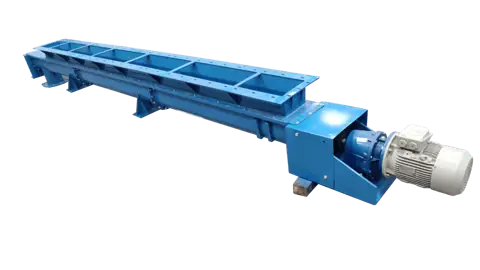
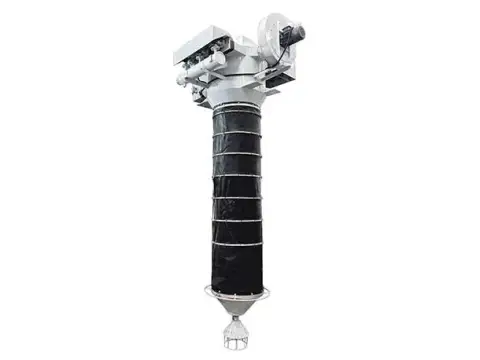
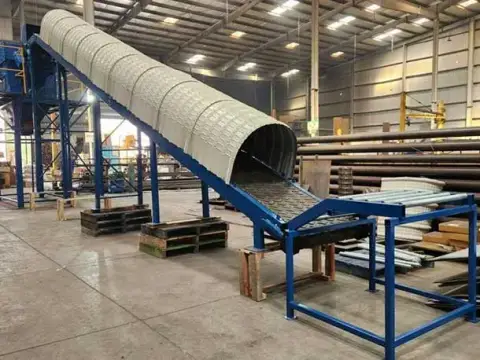
Depending on the material flow and plant layout, buyers may also consider Saksham Industrial Engineers' Flat Belt Conveyor, Horizontal Screw Conveyor, Stainless Steel Screw Conveyor, Vacuum Conveying System and Bulk Loading Spout. These products can be relevant where telescopic conveying forms part of a wider material-handling arrangement.