What is a Non Metallic Expansion Joint?
A Non Metallic Expansion Joint is a flexible connection used between ducts, pipelines or equipment to absorb thermal movement, vibration, mechanical displacement and misalignment.
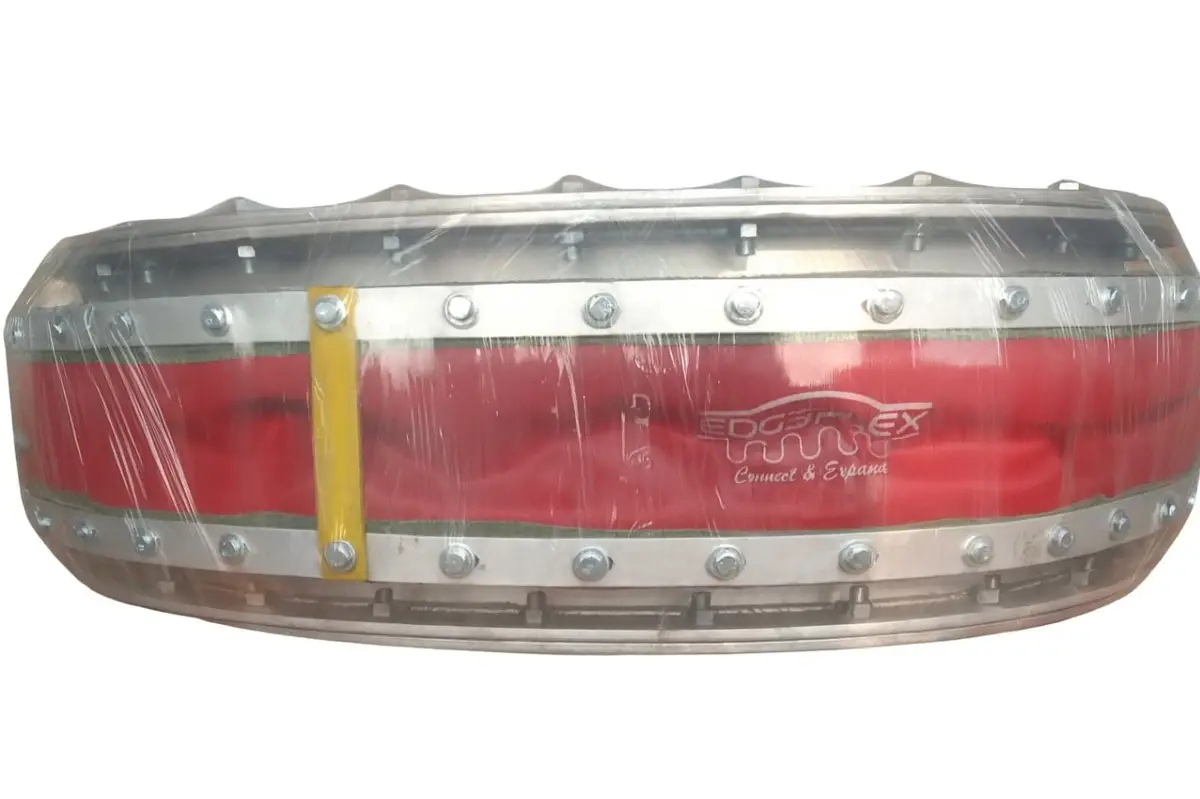
Expansion Joints
Non Metallic Expansion Joints
Non Metallic Expansion Joints are flexible connectors used between ducts, pipelines and equipment to absorb thermal movement, vibration and mechanical displacement. Made from materials such as rubber, PTFE and fabric-reinforced composites, they are suitable for applications involving gases and fluids. Their flexibility, corrosion resistance and practical installation make them useful in power, chemical, cement, steel, HVAC and related industrial systems.
The construction of a Non Metallic Expansion Joint depends on the selected application and material. Saksham Industrial Engineers' product information identifies rubber, PTFE and fabric-reinforced composites as available material choices. The joint is designed as a flexible connection between sections of a system, allowing movement while maintaining the connection between the adjoining components.
Different configurations can be considered for different operating requirements. Fabric expansion joints are identified for low-pressure and high-temperature environments, while rubber versions are commonly used for water, chemical and wastewater applications. PTFE versions are suitable for applications where resistance to corrosive media is important.
The available product information specifies movement absorption in axial, lateral and angular directions, with flanged or cuffed connection options. The listed size availability is up to 5000 mm, while the stated temperature capability is up to 600°C; final suitability should always be confirmed against the actual application conditions before purchase.
The operating principle is straightforward:
Correct selection and installation are important because the joint must correspond with the actual temperature, pressure, media and movement conditions of the system.
Non Metallic Expansion Joints are useful wherever piping or duct systems require flexibility and movement compensation. In power generation plants, they can be applied in systems where thermal movement and vibration need to be accommodated. In cement and steel plants, flexible connections can help address movement and vibration within associated ducting and process systems.
In chemical and petrochemical plants, material selection becomes particularly important because the joint may be exposed to chemically aggressive media. PTFE and suitable fabric-based configurations can be considered where corrosion resistance is required.
For pulp and paper manufacturing, the joints can be used in suitable fluid or ducting systems requiring flexible connections. In HVAC and ventilation systems, they can help accommodate movement and reduce vibration transmission between connected equipment and ductwork.
Relevant applications include:
The appropriate material and configuration should be selected according to the actual process conditions rather than the industry name alone.
A properly selected expansion joint can provide several practical advantages to an industrial system. It helps compensate for thermal and mechanical movement, reducing stress transferred to connected pipelines and equipment. Its flexible construction can also help minimize vibration and noise transmission.
Non-metallic construction provides useful flexibility and can offer resistance to corrosion in applications where metallic components may not be the preferred option. The relatively lightweight construction can make handling practical during installation, while periodic inspection helps identify wear or leakage before it develops into a larger operational concern.
Performance depends on choosing the correct material, configuration and dimensions for the operating environment. Temperature, pressure, media type, movement direction and connection arrangement should all be considered before final selection.
Saksham Industrial Engineers lists rubber, PTFE and fabric-reinforced composites as material options and identifies axial, lateral and angular movement absorption. The product information also states that the joints undergo quality checks and are supplied with warranty coverage. Application-specific suitability should be confirmed with the technical team before ordering.
Before purchasing, an industrial buyer should provide clear application information. Important considerations include:
Providing these details helps the supplier recommend a configuration appropriate for the actual operating conditions.
Established in 2011, Saksham Industrial Engineers is a Noida-based industrial equipment supplier and consultancy company specializing in bulk powder handling solutions. Its product portfolio covers equipment for discharging, feeding, conveying, extracting, dosing and metering, along with related industrial components. The company states that it works with global manufacturing partners and provides marketing, sales and service support for Indian industries.
For buyers looking for Non Metallic Expansion Joints Manufacturers in Bengaluru, Saksham Industrial Engineers provides product information, customization support and technical consultation based on application requirements. The company can assist buyers in discussing material selection, dimensions, pressure requirements and other relevant operating conditions before finalizing the product.
Depending on the plant application, buyers may also need related equipment from Saksham Industrial Engineers, including Metallic Expansion Joints for applications where a metallic solution is appropriate, Industrial Dust Filter for dust-handling systems, Silo Vent Filter for silo applications, Bulk Loading Spout for controlled bulk-material loading, or Vacuum Conveying System for pneumatic material transfer. These products can be considered separately according to the requirements of the overall plant system.
A Non Metallic Expansion Joint is a flexible connection used between ducts, pipelines or equipment to absorb thermal movement, vibration, mechanical displacement and misalignment.
They are used in suitable piping, ducting and equipment connections across power, cement, steel, chemical, petrochemical, pulp and paper, HVAC, water and wastewater applications.
The flexible joint accommodates movement between connected components. When thermal expansion, vibration or mechanical displacement occurs, the joint flexes and helps reduce the stress transferred to the connected system.
The product information identifies rubber, PTFE and fabric-reinforced composites. The appropriate material depends on factors such as process media, temperature, pressure and application conditions.
Yes, depending on the selected construction and operating conditions. The product information lists a temperature capability of up to 600°C, but the exact suitability should be confirmed for the specific application before purchase.
Buyers should consider media type, operating temperature, pressure, required movement, connection size, movement direction, available installation space and material compatibility.
Yes. Saksham Industrial Engineers states that different designs, sizes and pressure ratings can be customized according to application requirements. Exact dimensions and configuration should be finalized after reviewing the application details.
Routine inspection is recommended to identify signs of wear, deterioration or leakage. Inspection frequency should depend on operating conditions and the importance of the connected system.
Share the required size, material preference, operating temperature, pressure, process media, movement requirements and connection details with the supplier. Saksham Industrial Engineers can then discuss product configuration, customization and commercial requirements.
There is no single manufacturer that is objectively best for every application. Saksham Industrial Engineers is an option for buyers seeking Non Metallic Expansion Joints in Bengaluru, with product customization and technical consultation available according to application requirements. The company has been established since 2011 and operates from Noida while serving industrial customers and applications across relevant sectors.
Customer reviews
★ 0.0 (0 reviews)
Loading reviews...
Similar Picks