
To size a slide gate valve, start with the outlet you already have. Measure the opening and connection on the hopper, silo or chute, and choose a valve that matches them. Then check the material, the load above the gate, the operating method and the space around the valve. Unlike a pump or a feeder, the valve is not sized from a flow-rate formula. It is sized to fit the equipment it sits on.
Getting this right saves a lot of trouble later. A valve that is too small can choke the outlet. One that does not match the flange needs awkward adapters. And one that has no room for the gate to move simply cannot be installed. This guide walks through the steps in the order most engineers and buyers need them.
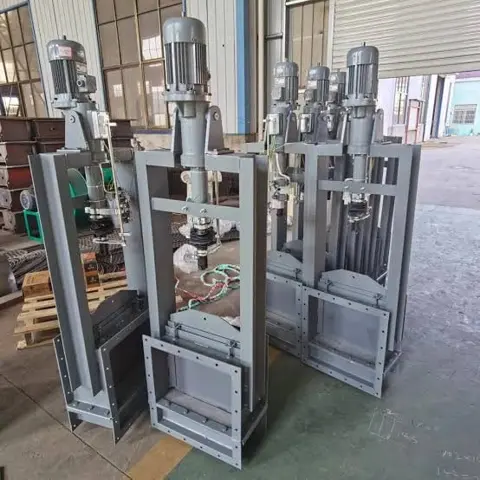
Sizing a slide gate valve in five steps
- Measure the outlet opening and the connection on your vessel or chute.
- Decide whether you need a square or round configuration.
- Check the material: lump size, flowability, abrasiveness and moisture.
- Choose the operating method and confirm the load and temperature.
- Confirm there is clearance for the gate and actuator, then send the details to your supplier.
The sections below explain each step.
Step 1: Start with the outlet you already have
The valve usually has to match the outlet of the hopper, silo or chute, not the other way around. Before you contact a supplier, collect these measurements:
- The clear internal dimension of the outlet (width and length for a square outlet, diameter for a round one).
- The outer dimensions of the outlet flange.
- The bolt hole layout: number of holes, hole size and spacing.
- The flange thickness, and what is bolted below it, such as a feeder inlet or a chute.
- The vertical space between the outlet and the equipment below.
A photo and a simple sketch with these figures often save several rounds of emails. If the outlet and valve do not match, a transition piece is the usual fix, but it adds height and cost, so it is better to avoid it.
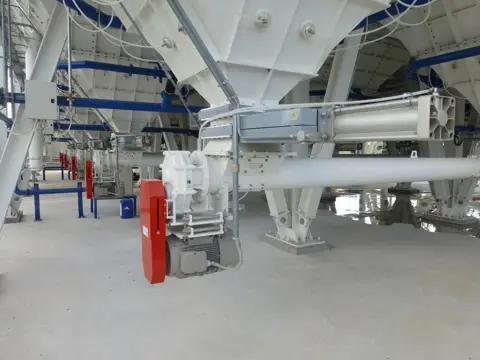
Saksham Industrial Engineers lists its slide gate valve in sizes from 100 mm to 600 mm, with flanged connections and square or round configurations. If your outlet is outside that range, ask the team whether a custom size is possible.
Does valve size control the flow rate?
Not in the way many people expect. A slide gate valve is mainly an on/off device. It starts, stops and isolates flow, and it is normally fully open while material is moving. The flow rate is set by the outlet size, the material’s flow behaviour, and whatever sits below the valve, such as a feeder.
So avoid choosing a smaller valve to restrict flow. A reduced opening can encourage bridging or arching, where material locks across the outlet and stops. If you need a controlled discharge rate, a screw feeder or a rotary valve below the slide gate is the better tool, and the slide gate acts as the isolation point.
Step 2: Square or round?
The shape should follow the vessel outlet and the equipment below it. Square and rectangular openings are common on hoppers and bins. Round openings are common on spouts, chutes and pipe connections. Saksham lists both configurations, so the choice is usually decided by your existing flange rather than by preference.
Step 3: Check the material you are handling
Dimensions alone do not tell you whether the valve will work. Share these material details as well:
- Particle or lump size. The opening should be comfortably larger than the biggest lump you expect.
- Flowability. Free-flowing granules behave very differently from fine, cohesive powders that tend to arch over the outlet.
- Abrasiveness. Abrasive materials call for suitable construction and sealing.
- Moisture and stickiness. Damp or sticky material can build up around the gate.
- Bulk density. This affects the load the gate has to move against.
If the real problem is that material will not flow to the outlet, a larger valve will not solve it. A bin activator or a fluidizing pad addresses flow at the source. Outlet size for cohesive powders is a hopper design question, and it is worth settling before the valve is ordered.
Hopper, silo or chute: what changes?
The same valve type is used in all three, but the points to watch differ.
| Location | What to watch |
|---|---|
| Hopper or bin | Match the outlet flange. Check headroom below the outlet for the valve, actuator and downstream equipment. |
| Silo | The column of stored material above the gate is taller, so tell the supplier the head height and bulk density. Plan safe access for inspection and service. |
| Chute | Material is usually moving, so think about the chute angle, the mounting direction and where material could pack around the gate. |
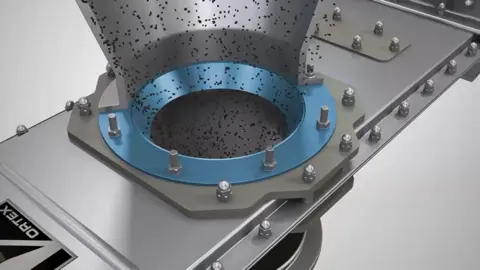
Step 4: Choose the operating method
- Manual suits valves that are operated occasionally and are easy to reach.
- Pneumatic suits automated lines and needs a compressed air supply at the valve.
- Motorized suits locations where an electric drive is easier to provide than air.
Larger valves, taller material columns and heavier materials all increase the force needed to move the gate, so share your size and head height when you discuss actuation. Do not assume that a manual valve will suit a large silo outlet.
Step 5: Check clearance and operating conditions
The gate needs room to travel, and the handwheel or actuator needs space beside the valve. Check the clearance on the drawing before ordering, including nearby walls, platforms, pipework and structural steel. Also confirm where the valve will be mounted, since the product can be installed horizontally or vertically depending on the layout.
For operating conditions, the Saksham product page lists temperature and pressure limits. These figures should be confirmed for the exact configuration you plan to buy, because they depend on the design, seals and actuator.
For construction, the page lists mild steel and stainless steel grades SS304 and SS316, with PTFE, neoprene or rubber sealing options. Match these to your material and environment, for example stainless steel for hygiene-sensitive food or pharmaceutical duty.
What to send your supplier
A complete enquiry avoids guesswork. Include:
- Outlet opening dimensions and shape (square or round)
- Flange outline and bolt hole details, or a drawing
- Material handled, particle size, bulk density and any abrasiveness
- Head height of material above the gate
- Mounting position (horizontal or vertical)
- Operating method: manual, pneumatic or motorized
- Operating temperature and any pressure at the valve
- Construction and seal preferences
- Available clearance around the valve
Safety note
Never work on a valve under a loaded silo or hopper without isolating and securing the equipment first. Follow your site’s lock-out and confined-space procedures, and use the manufacturer’s installation instructions for fitting and servicing.
Frequently asked questions
How do I know what size slide gate valve I need?
Measure the outlet of your hopper, silo or chute, including the opening and the flange bolt layout. The valve is normally chosen to match the outlet, then checked against the material, operating method and available space.
Can I use a smaller slide gate valve to reduce the flow?
It is not recommended. A reduced opening can cause bridging or arching. A slide gate is mainly for on/off isolation, so use a feeder if you need controlled discharge.
Should I choose a square or round slide gate valve?
Follow the shape of the outlet and the connection below it. Square suits many hoppers and bins, and round suits many spouts and chutes.
Does the height of material above the valve matter?
Yes. The head of material and its bulk density affect the load on the gate and the force the operating method has to provide. Give these details to your supplier, especially for silo outlets.
What sizes does Saksham Industrial Engineers list for slide gate valves?
The product page lists a range of 100 mm to 600 mm. For other sizes or special arrangements, contact the technical team to ask about customization.
Do I need to know the temperature and pressure?
Yes. Share the operating temperature and any pressure at the valve, and confirm the limits for your exact configuration before ordering.
Getting the size right the first time
Sizing a slide gate valve comes down to a handful of facts: the outlet dimensions, the material, the load above the gate, the operating method and the space around the valve. Gather those before you ask for a quotation, and most fitting problems disappear.
You can review the slide gate valve configurations from Saksham Industrial Engineers, and send your outlet details to the team for technical guidance on size, construction and operation.
