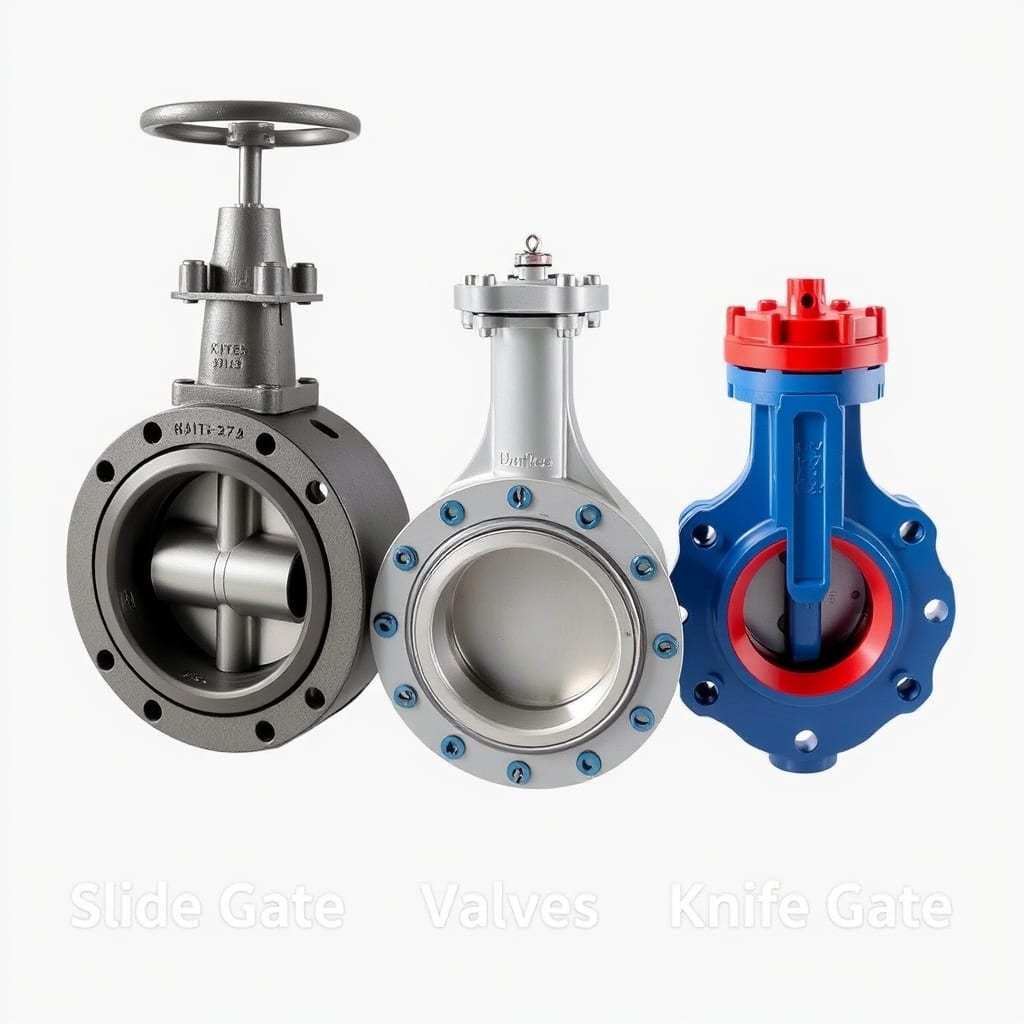
There is no single best valve here. The right choice depends on what is flowing through it. For dry powders, granules and pellets, a slide gate valve is usually the natural fit. For thick or abrasive slurry, a knife gate valve is the usual choice for on/off isolation. A butterfly valve works well for liquids, gases and lighter slurries in pipelines, where a compact quarter-turn valve is useful.
Mixing these up is a common and costly mistake. A valve that works well on a water line can struggle under a hopper, and a valve built for powder is not made to hold back a wet, pressurised stream. This guide explains how each valve works, where it fits, and what to check before you choose.
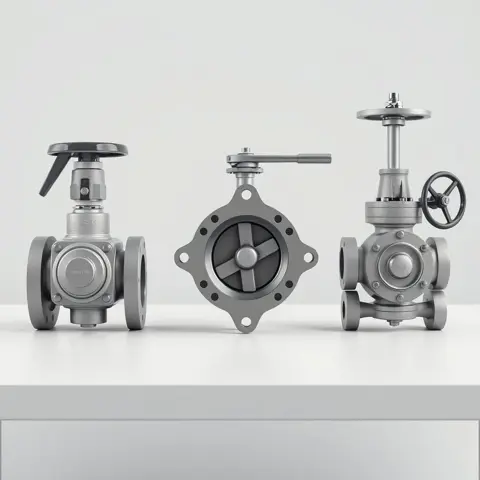
Quick answer: which valve for which material?
| If your material is... | Usually consider... | Why |
|---|---|---|
| Dry powder, granules or pellets falling by gravity | Slide gate valve | Built to start, stop or isolate dry bulk flow at hoppers, silos and chutes |
| Thick, fibrous or abrasive slurry (on/off isolation) | Knife gate valve | The blade can cut through heavy media and gives a straight-through opening |
| Water, gases or lighter, clean slurry in a pipeline | Butterfly valve | Compact, quarter-turn, suited to pipeline fluid control |
Treat this as a starting point, not a final answer. Particle size, solids content, abrasiveness, pressure and temperature all matter.
How each valve works
Slide gate valve
A flat gate slides across the opening. With the gate open, dry material passes through. With it closed, the passage is blocked. It is usually bolted to the outlet of a silo, bin or hopper, or placed ahead of a feeder or conveyor. Saksham Industrial Engineers lists its slide gate valve for powders, granules and pellets, with manual, pneumatic and motorized operation.
Butterfly valve
A disc sits inside the pipe and rotates a quarter turn (90 degrees) between open and closed. It is compact and quick to operate, and it can be used for isolation or for regulating flow. The catch is that the disc stays in the flow path even when the valve is fully open. That is fine for clean fluids, but it matters a great deal when the media is abrasive or full of solids. Saksham’s butterfly valve is listed for liquids, gases and slurries in pipelines.
Knife gate valve
A knife gate valve uses a blade, often with a sharpened or bevelled edge, that slides through the valve body. Because it cuts through thick media and leaves a straight-through port when open, it is common in slurry, pulp, wastewater and other heavy flows. It is mainly an on/off isolation valve, not a throttling valve. Designs range from light-duty utility types to heavy-duty slurry types with replaceable sleeves, and the difference matters in abrasive service.
Which valve is best for dry bulk materials?
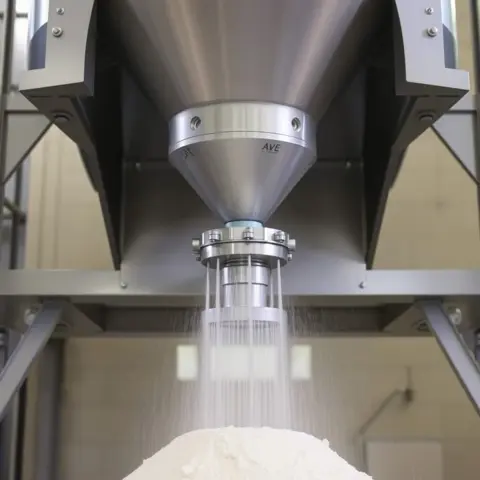
For free-flowing dry solids, a slide gate valve is usually the most practical option. It is designed for material that drops by gravity, it fits neatly at discharge points, and it gives you simple isolation for maintenance. You can, for example, close the gate and service a screw feeder without emptying the silo above it.
A standard pipeline butterfly valve is generally not the first choice under a hopper. The disc sits in the stream, and powder can pack against it. Specially designed butterfly-style valves for powder do exist, but they are a different product category from a general pipeline butterfly valve.
If you need continuous, metered discharge or an air seal between pressure zones, a valve of a different type is the right tool. A rotary airlock valve or a double flap valve handles that job, and a slide gate often sits above them as the isolation point.
Also remember that a valve cannot fix a flow problem in the vessel. If material bridges or rat-holes above the outlet, a bin activator addresses the cause directly.

Which valve is best for slurry?
Slurry is not one thing. A thin, clean mixture behaves very differently from a dense, abrasive mix of hard particles, so start by asking how abrasive and how solid-heavy yours is.
- Thick, abrasive or high-solids slurry: a knife gate valve is commonly chosen for on/off isolation. For severe abrasion, plants usually look at heavy-duty slurry designs rather than light utility ones.
- Lighter, cleaner slurry or fluids: a butterfly valve can be a sensible, compact option, provided the body, disc and seat materials suit the medium.
- Abrasive slurry and butterfly valves: many engineers avoid them where wear is a concern, because the disc is always in the flow and its edge and seat take the abrasion.
- Slide gate valves for liquids: a dry bulk slide gate is not normally designed to seal liquids or pressurised slurry.
Saksham lists its butterfly valve with an aluminium body, a 100–300 mm size range, ambient-temperature application and manual or pneumatic operation. If your slurry is abrasive, hot or high in solids, confirm suitability with the technical team before ordering.
Side-by-side comparison
| Feature | Slide gate valve | Butterfly valve | Knife gate valve |
|---|---|---|---|
| Best for | Dry powders, granules, pellets | Liquids, gases, lighter slurries | Thick, fibrous or abrasive slurry |
| Typical position | Below silos, hoppers, bins; ahead of feeders | Pipelines | Pipelines and slurry lines |
| Operation | Sliding gate, linear movement | Quarter-turn disc | Sliding blade, linear movement |
| Element in the flow path when open | Gate clears the opening | Disc stays in the flow | Blade retracts out of the flow |
| Main role | Start, stop, isolate | Isolate or regulate | Mainly on/off isolation |
| Main weakness | Not made for liquids | Disc wear in abrasive service | Not suited to throttling |
Common mistakes to avoid
- Putting a pipeline butterfly valve under a hopper because it is cheaper or compact. Powder can build up on the disc.
- Using a knife gate valve to throttle flow. It is designed mainly for open or closed service.
- Using a light-duty valve in severe slurry and expecting it to last. Match the construction to the abrasiveness.
- Choosing by size alone. Two valves with the same nominal diameter can suit completely different media.
How to choose: questions to answer first
Share these details with your supplier before ordering:
- Is the material a dry solid or a wet slurry, and how abrasive is it?
- What are the particle size and the solids content?
- What is the opening or pipe size and connection type?
- What are the operating temperature and pressure?
- Do you need on/off isolation or flow regulation?
- Will it be manual, pneumatic or motorized?
- What body, seat and seal materials suit the medium?
- How will operators reach it for inspection and maintenance?
Frequently asked questions
What is the main difference between a slide gate valve and a knife gate valve?
A slide gate valve is built for dry bulk solids that fall by gravity, such as powders and pellets. A knife gate valve is built to cut through thick slurry and similar media in a pipeline. They look similar but are designed for different materials.
Can I use a butterfly valve for dry powder?
Standard pipeline butterfly valves are generally chosen for fluids, because the disc stays in the flow path and powder can pack on it. Special butterfly-style designs exist for dry bulk, so check with the supplier if you want to explore that option.
Which valve is best for abrasive slurry?
Knife gate valves are commonly used for abrasive slurry isolation, and severe service usually calls for a heavy-duty slurry design. The best choice still depends on particle size, solids content, pressure and temperature.
Can a knife gate valve control flow?
It is mainly an on/off valve. It is not normally the right choice for throttling, especially in abrasive service.
Can a slide gate valve handle slurry or liquids?
A dry bulk slide gate valve is meant for powders, granules and pellets. It is not normally designed to seal liquids or pressurised slurry, so use a valve suited to wet media instead.
What information do I need before asking for a quotation?
Share the material, particle size, solids content, size and connection, operating temperature and pressure, operating method and any material preferences. This lets the supplier check suitability instead of guessing.
Choosing the right valve
Match the valve to the material first and the size second. Dry bulk calls for a slide gate valve, thick abrasive slurry usually calls for a knife gate valve, and liquids or lighter fluids suit a butterfly valve.
If you handle dry powders, granules or pellets, you can review the slide gate valve options from Saksham Industrial Engineers. If your line carries liquids, gases or lighter slurry, see the butterfly valve range. For any application where you are unsure, contact the team with your material and operating details for technical guidance.
