Two-Way vs Three-Way Diverter Valves: Which Does Your Conveying Line Need?
If one conveying line has to serve more than one destination, you will quickly meet the question of whether a two-way or a three-way diverter valve is the better fit. The names sound close, but the choice affects how your line is laid out, how it is controlled and how easy it is to extend later.
Here is the short answer. A 2 way diverter valve suits a simple either/or split: one common inlet, two possible outlets. A 3 way diverter valve is the better choice when the layout needs a three-port junction, for example when several silos, bins or mixers share a common route, or when you need the larger size range or lined construction listed for that model.
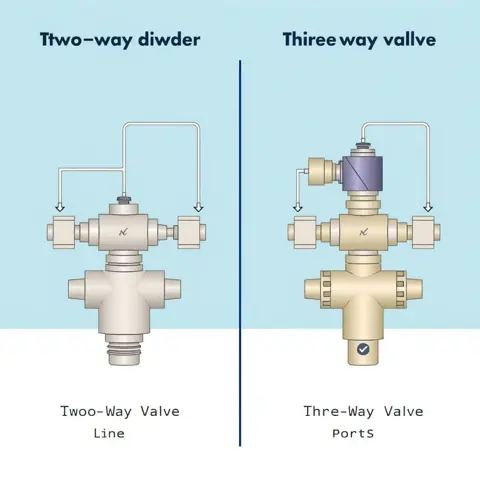
A quick word on naming
Manufacturers do not always use these terms in exactly the same way. Some describe a valve by the number of ports, others by the number of outlet positions. Before you compare quotations, ask each supplier for a drawing that shows the ports, the flow directions and the positions of the internal element. That one document avoids most misunderstandings.
How a two-way diverter valve works
A two-way diverter valve takes material in through a common inlet and sends it to one of two outlets. Inside, a diverter blade or flap moves to open one route and close the other. The element is moved by a manual, pneumatic or electric actuator, and changing the position sends the material to the other destination.
Saksham's product information describes it for powders, granules and pellets in pneumatic conveying, silo and hopper discharge, batching, blending and material distribution lines. It lists carbon steel, SS304 and SS316 construction, flanged, clamp or welded mounting, and a size range of 50 mm to 300 mm with custom sizes available.
Its main strength is simplicity. With only two routes, the layout is easy to understand, the controls are straightforward, and there is generally less to inspect and maintain. The limit is just as clear: it serves two destinations. If a third one appears later, you will need another valve or a different arrangement.
How a three-way diverter valve works
A three-way diverter valve has three connected ports. In a typical arrangement, material enters through one port and is directed to either of the other two. Depending on the system and the configuration, the arrangement can also work in reverse, so that flow from two lines is brought together. If you are considering that use, ask the supplier to confirm it for your conveying method.
The product information lists powders, granules and pellets in pneumatic, gravity and mechanical conveying, a size range of 100 mm to 500 mm with custom sizes available, and MS, SS304 and SS316 construction. It also lists PU, ceramic and rubber lining options for applications where the material is abrasive.
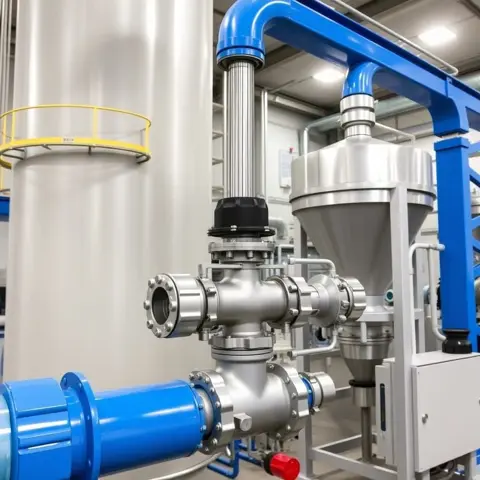
This makes it useful where several silos, bins, mixers or process stations need to share a common material route. The trade-off is extra complexity: three ports mean more to seal, more to plan in the pipework and more to specify correctly.
Two-way vs three-way: side-by-side comparison
| Factor | 2 way diverter valve | 3 way diverter valve |
|---|---|---|
| Routing | One common inlet to either of two outlets | Three connected ports; one inlet to either of two outlets, or the reverse arrangement depending on configuration |
| Conveying methods listed | Pneumatic conveying, silo and hopper discharge, batching and blending, material distribution | Pneumatic, gravity and mechanical conveying |
| Size range listed | 50 mm to 300 mm, custom sizes available | 100 mm to 500 mm, custom sizes available |
| Construction options listed | Carbon steel, SS304, SS316 | MS, SS304, SS316, with PU, ceramic or rubber lining options |
| Operation | Manual, pneumatic or electric | Manual, pneumatic or electric |
| Best for | Simple either/or routing between two destinations | Shared routes across several pieces of equipment, larger lines, abrasive duties needing lining |
Pressure and temperature limits are listed on each product page and differ between the two models. Treat them as a starting point and confirm the figures for your exact configuration before ordering.
Five questions that settle the choice
1. How many destinations do you have, now and soon?
If the answer is two and will stay two, the simpler valve is usually the sensible one. If you expect to add equipment, think about whether a three-way or a 4 way diverter valve will save you rework later.
2. How is the material conveyed?
Gravity chutes, pneumatic lines and mechanical conveyors all behave differently. Make sure the valve you choose is offered for your conveying method, and ask how its sealing copes with your line pressure.
3. What is the material like?
Abrasive powders wear internal surfaces quickly. If that describes your product, lining options become important, and the three-way model's listed PU, ceramic and rubber options are worth discussing. For food or pharmaceutical duties, stainless steel is usually considered, but do not assume any certification unless the supplier confirms it for your valve.
4. How will the valve be operated?
Manual operation can work when routes change rarely and the valve is easy to reach. Automated plants usually need pneumatic or electric actuation, which also depends on having compressed air or power at the valve. It is worth asking whether position feedback can be supplied so your control system knows the valve has fully moved before conveying starts.
5. What size and space do you have?
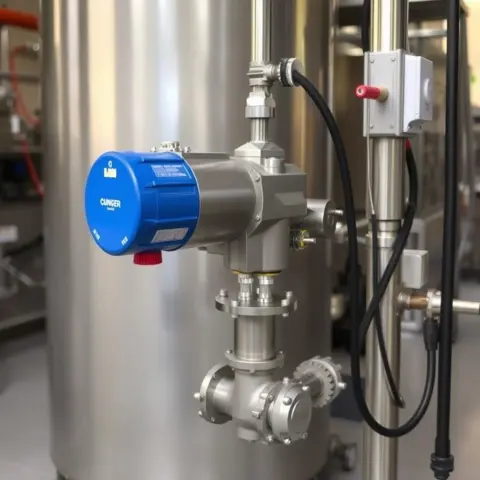
Size the valve to your line and throughput, not to the category name. Also check access for inspection, cleaning and seal replacement, because a valve that is hard to reach tends to be neglected.
When neither valve is the right answer
Sometimes the requirement is not routing at all. If you only need to start, stop or isolate flow below a hopper or silo, a slide gate valve is the usual tool. If you need to meter discharge while limiting air movement between two zones, a rotary airlock valve is worth a look. Diverters change direction; they are not designed to replace either of these jobs.
Information to send before requesting a quotation
- Material name, particle size, bulk density, abrasiveness and moisture behaviour.
- Number of destinations, now and in the near future.
- Conveying method: gravity, pneumatic or mechanical.
- Line size and required throughput.
- Operating pressure and temperature, including peak values.
- Body material, lining and hygiene needs.
- Preferred operation and the utilities available at the valve.
- Mounting orientation, connection type and available space.
Frequently asked questions
What is the main difference between a two-way and a three-way diverter valve?
A two-way valve sends material from one common inlet to either of two outlets. A three-way valve connects three ports and, depending on configuration, can also work in the reverse arrangement. Because manufacturers name valves differently, confirm the port layout on a drawing.
Can a two-way diverter valve be used in pneumatic conveying?
Yes, pneumatic conveying is one of the applications listed for it. Correct selection still depends on line pressure, material, size and sealing, so share your operating details with the supplier.
Which valve is better for abrasive powders?
The three-way model lists PU, ceramic and rubber lining options, which are relevant for abrasive materials. If you need lining or a particular wear solution on another valve, ask the supplier whether it can be provided.
Can I choose between manual, pneumatic and electric operation on both?
Both models list manual, pneumatic and electric operation. Pick the one that matches how often routes change, how accessible the valve is and what your control system needs.
Should I buy a three-way valve now in case I expand later?
Only if the layout really calls for three ports. A valve that is more complex than your process needs adds cost and maintenance. Plan for realistic expansion, then ask your supplier which configuration handles it best.
Making the final call
Choose the two-way valve when your line has two destinations and a simple either/or decision. Move to the three-way when the layout, size or lining requirement needs it. Either way, base the choice on your material, conveying method and control setup, not just the pipe size. To compare configurations for your plant, see the diverter valve range from Saksham Industrial Engineers, then share your process details through the contact page to discuss the right option.
