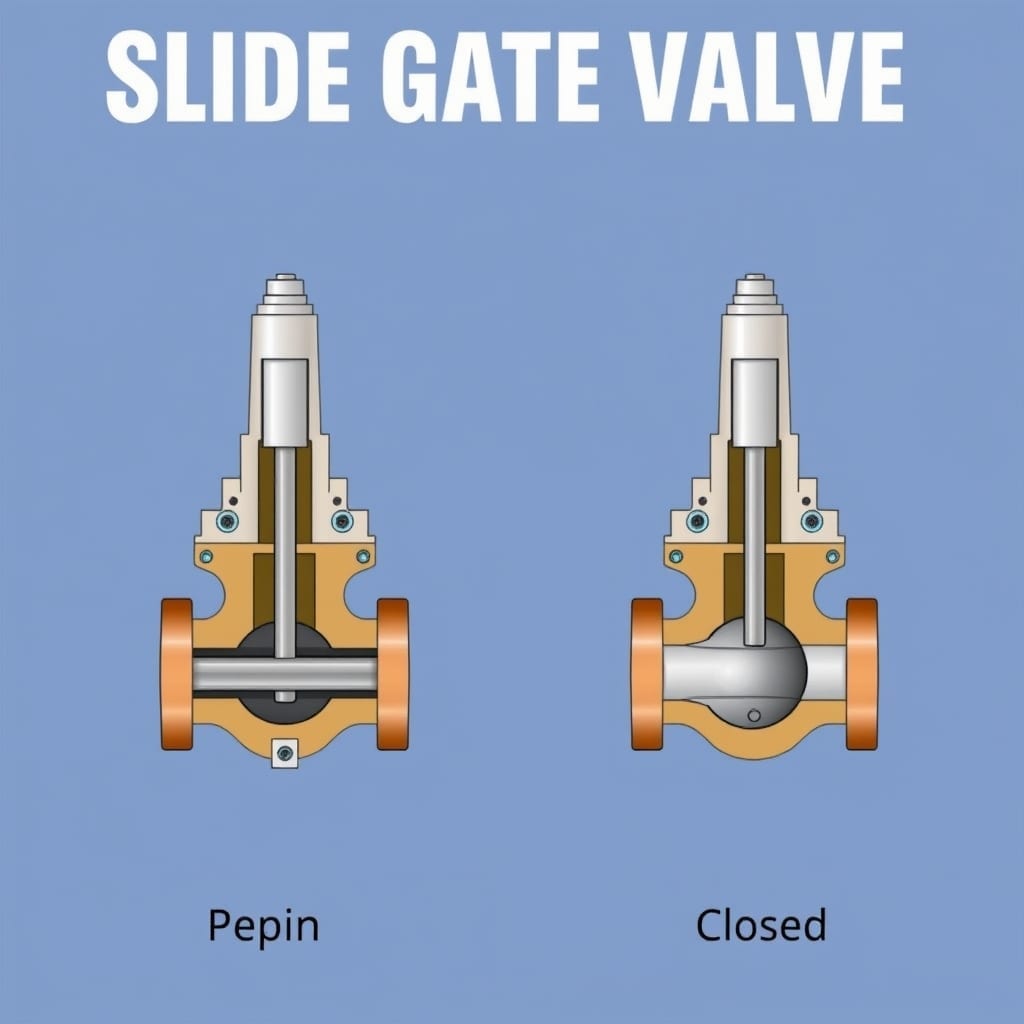
A slide gate valve is a flow-control device that starts, stops or isolates the movement of dry bulk materials such as powders, granules and pellets. A flat gate slides across the material opening. When the gate is open, material passes through. When it is closed, the passage is blocked.
That simple action is why you will find slide gate valves under silos, hoppers and bins, and ahead of feeders and conveyors. If you are trying to understand what a slide gate valve does, how it differs from other valves, or what to check before ordering one, this guide covers the essentials in plain language.
What is a slide gate valve?
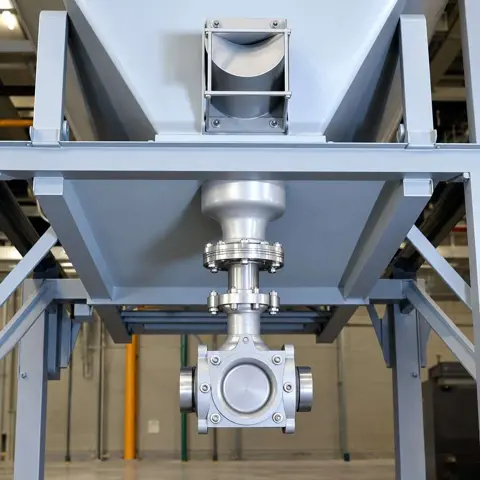
Most people picture valves as something that controls liquids in a pipe. A slide gate valve belongs to a different family. It is built for dry bulk solids that fall by gravity or are fed into the next piece of equipment, so it is usually bolted directly to the outlet of a storage vessel or the inlet of a machine.
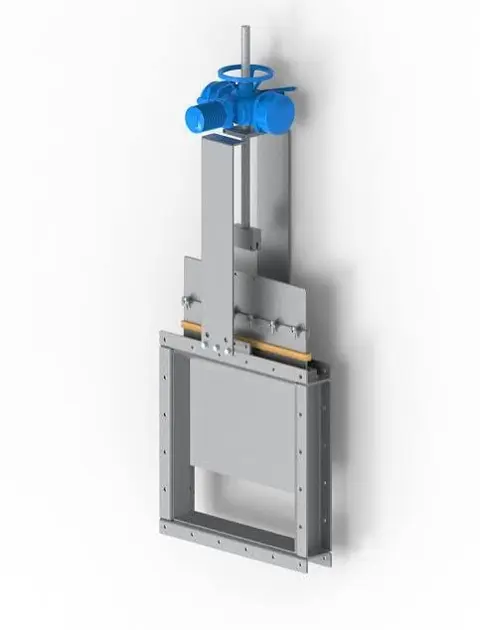
The valve has four main parts:
- Body: the frame that connects to the equipment above and below it.
- Sliding gate: the plate that moves across the opening.
- Sealing arrangement: the element that limits leakage of material or air around the gate.
- Operating mechanism: a handwheel or lever for manual use, or an actuator for automatic use.
Because the design is simple, it is easy to understand, inspect and fit into an existing plant layout. The slide gate valve from Saksham Industrial Engineers follows this same basic construction and is offered for powders, granules and pellets.
How does a slide gate valve work?
The working principle is straightforward:
- With the gate closed, the plate blocks the opening and holds the material back.
- An operator or actuator moves the gate away from the opening.
- Once the gate clears the opening, material flows through under gravity or into the equipment below.
- Moving the gate back across the opening stops the flow and isolates the section below.
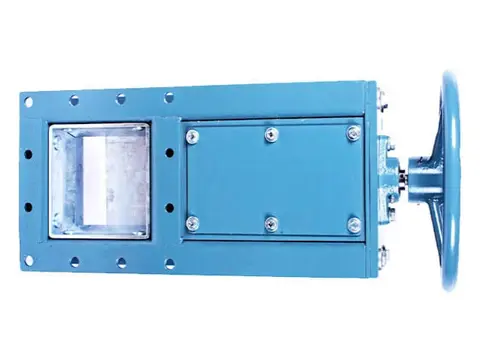
A slide gate is mainly an on/off device. Some plants partly open the gate to reduce the flow, but that is not what the valve is mainly designed for. A gate left partly open can wear faster and can let material pack against the plate. If you need accurate, metered flow, a feeder is usually the better tool, and the valve then acts as the isolation point.
Manual, pneumatic and motorized operation
The operating method should match how the plant runs:
- Manual: suits points that are opened and closed occasionally and are easy to reach, such as a hopper outlet that is isolated for maintenance.
- Pneumatic: uses compressed air to move the gate. It suits automated lines where the valve must open and close on a signal from a controller.
- Motorized: uses an electric drive. It suits sites where compressed air is not convenient at the valve location.
Where is a slide gate valve used?
Slide gate valves sit wherever dry material has to be released, held back or isolated. Common positions include:
- Silo, bin and hopper discharge: to start and stop the outflow of stored material.
- Ahead of feeders and conveyors: to isolate a screw feeder or a horizontal screw conveyor when it needs inspection or cleaning, without emptying the vessel above it.
- Gravity-fed transfer chutes: to control when material moves from one process stage to the next.
- Bulk conveying arrangements: to control the material path or isolate a section of the line.
Any industry that handles dry bulk solids can use them. Typical examples include cement and building materials, chemical processing, food processing, pharmaceutical manufacturing, and mining and minerals. The right construction differs between these sectors. A food or pharmaceutical line may call for stainless steel and a hygienic finish, while a mineral plant may prioritise wear resistance.
Slide gate valve vs other valves in a bulk handling line
A slide gate valve is often confused with other valves that sit near it. They do different jobs, and plants often use more than one in the same line.
| Valve type | Main job | Typical position |
|---|---|---|
| Slide gate valve | Start, stop or isolate flow of dry bulk material | Below a silo, bin or hopper, or ahead of a feeder |
| Rotary airlock valve | Controlled discharge while limiting air leakage between pressure zones | Pneumatic conveying lines and dust collection systems |
| Double flap valve | Sequential discharge that helps keep pressure zones separate | Hopper and dust collector outlets |
| Butterfly valve | Quarter-turn control of liquids, gases and slurries | Pipelines |
In practice, a slide gate valve is often fitted above a rotary airlock valve. The slide gate lets maintenance staff isolate the airlock without emptying the silo, while the airlock handles the continuous discharge.
What to check before choosing a slide gate valve
Suppliers can only recommend the right valve if they know your process. Prepare these details before you ask for a quotation:
- Material handled: powder, granule or pellet, and whether it is abrasive, sticky or prone to forming lumps.
- Opening size and connection: the dimensions of your existing outlet, and whether you need a square, round or flanged connection.
- Construction material: mild steel or stainless steel, depending on hygiene, corrosion and wear conditions.
- Sealing material: chosen to suit the material, temperature and level of dust tightness you need.
- Operating method: manual, pneumatic or motorized.
- Installation position: horizontal or vertical mounting, and how much space is available around the valve for the actuator and gate travel.
- Operating conditions: temperature and pressure at the valve location.
For reference, the Saksham Industrial Engineers product page lists a size range of 100 mm to 600 mm, mild steel or SS304/SS316 construction, and sealing options including PTFE, neoprene and rubber. It also lists temperature and pressure limits for the product. Always confirm these figures for the exact configuration you plan to order, because limits depend on the specific design, seals and actuator.
Practical points on installation and care
- Keep the gate path clear. Material trapped in the gate guides can cause sticking or extra wear, so avoid closing the valve onto a heavy stream unless the design is intended for it.
- Plan access. Leave room to inspect the gate, seals and actuator.
- Maintain moving parts. Cleaning and lubricating the appropriate moving components helps keep operation smooth. The right interval depends on how often the valve operates and what material it handles, so follow the manufacturer’s guidance.
- Work safely. Before any inspection or repair, isolate the equipment and follow your site’s lock-out procedures, especially with pneumatic or motorized valves.
If material still hangs up above the valve, the cause is usually the vessel rather than the gate. A bin activator can help reduce bridging and rat-holing at the outlet. If the silo fills with air-borne dust, a silo vent filter addresses that separate problem.
Frequently asked questions
What is a slide gate valve used for?
It is used to start, stop or isolate the flow of dry bulk materials such as powders, granules and pellets. It is commonly fitted below silos, hoppers and bins, and ahead of feeders and conveyors.
Can a slide gate valve be used for liquids?
Slide gate valves of this type are designed for dry bulk solids. For liquids, gases and slurries in pipelines, a valve such as a butterfly valve is normally the more suitable choice.
Can a slide gate valve control the flow rate?
Its main job is on/off isolation. Partial opening may give rough control in some arrangements, but it is not a precise method. A feeder is the better choice where accurate, repeatable feed rates matter.
Which operating type should I choose: manual, pneumatic or motorized?
Choose manual where the valve is operated occasionally and is easy to reach. Choose pneumatic for automated lines where compressed air is available. Choose motorized where an electric drive is more practical at the valve location.
Can a slide gate valve handle abrasive materials?
It can be specified for abrasive dry materials, but the construction material and sealing must be selected to suit the application. Share the material details with your supplier before ordering.
What is the difference between a slide gate valve and a rotary airlock valve?
A slide gate valve opens or closes the material passage and is mainly used for isolation. A rotary airlock valve discharges material continuously while limiting air leakage between pressure zones. They are often used together in the same line.
Choosing the right valve for your line
A slide gate valve is one of the simplest ways to control and isolate dry material at the outlet of a silo, bin or hopper. The right choice comes down to your material, opening size, operating method and operating conditions.
If you are specifying one for a new line or replacing an existing valve, you can review the slide gate valve configurations from Saksham Industrial Engineers or contact the team with your material, size and operating details for technical guidance.
