What is a Vacuum Conveying System?
A Vacuum Conveying System is an enclosed bulk-material handling system that uses vacuum pressure to draw powders, granules, pellets or other suitable solids through a pipeline from one point to another.
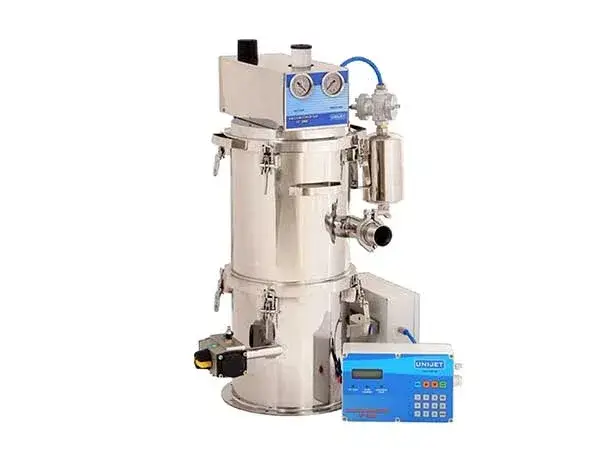
Conceying System
Vacuum Conveying System
A Vacuum Conveying System is an enclosed material-handling solution designed to transfer powders, granules, pellets and other bulk solids through pipelines using vacuum pressure. It supports clean, controlled movement of materials while reducing dust, spillage and product exposure. The system is suitable for applications across pharmaceutical, food, chemical, plastic and other powder-handling operations where reliable material transfer is required.
A Vacuum Conveying System is designed to move powders, granules, pellets and bulk solids from one point to another through an enclosed pipeline. Instead of relying on open or mechanically driven transfer, the system uses vacuum pressure to draw material from the feed location toward the receiving point. This enclosed method helps control dust, reduce spillage and limit unnecessary exposure of the conveyed material to the surrounding environment.
The system can be useful where materials need to be transferred between storage, processing, mixing, feeding or packaging stages. Its enclosed construction also makes it suitable for applications where cleanliness and controlled material handling are important. Saksham Industrial Engineers offers vacuum conveying solutions for different industrial requirements, with designs available according to application needs.
The design of a vacuum conveying system typically centers around a conveying pipeline, material pickup point, receiving arrangement, filtration system and vacuum source. The exact configuration depends on the material being conveyed and the requirements of the production line.
Saksham Industrial Engineers' listed system specifications include stainless steel construction options in SS 304 and SS 316. The product page also specifies compressed-air-driven or electric vacuum pumps as possible vacuum sources and HEPA/PTFE filtration options for fine dust separation.
The system can be configured to suit different material-handling arrangements. For food, pharmaceutical and other cleanliness-sensitive applications, the enclosed transfer route can help maintain better control over the conveying environment.
The basic operating sequence is straightforward:
The exact operating sequence and conveying method should be selected according to material properties, required throughput and plant conditions.
Vacuum conveying is particularly useful when materials need to be transferred in a controlled and enclosed manner. In pharmaceutical production, it can be used for transferring powders, active ingredients and excipients between process stages where contamination control is important.
Food-processing operations can use vacuum conveying for materials such as flour, sugar, spices and additives. In chemical processing, enclosed transfer can help manage fine powders and dust-prone materials. Plastic-processing applications can use the system for conveying pellets and resins.
The system can also be considered for material-transfer requirements involving fine powders and other bulk solids in metal, mining and related processing operations.
Relevant application sectors include:
The suitability of a particular configuration depends on the material, process conditions and required conveying arrangement.
A properly selected vacuum conveying system can provide several practical advantages for industrial plants. Its enclosed conveying route helps reduce material spillage and dust release compared with open transfer arrangements. It can also reduce direct operator exposure to conveyed materials.
The compact arrangement can be useful where production-floor space is limited, while automated material transfer can reduce the need for repeated manual handling. The system can also be integrated with existing process equipment where the layout and operating requirements permit.
For applications requiring controlled and cleaner material movement, vacuum conveying provides an alternative to conventional mechanical transfer methods.
Performance depends on several factors, including material characteristics, conveying distance, required capacity, pipeline arrangement, filtration and vacuum-source selection. The product information published by Saksham Industrial Engineers specifies conveying capacities from 100 kg/hr to 5,000 kg/hr and conveying distances of up to 50 metres, depending on the system design.
The listed system also includes PLC-based automation, with power requirements stated as 2 kW–15 kW depending on model. A specific system should not be selected from capacity alone; the actual material and process requirements need to be evaluated before final configuration.
Regular inspection of filters, conveying components and the vacuum system is important for maintaining dependable operation.
Before purchasing a vacuum conveying system, buyers should provide clear information about the material and production process. Important considerations include:
Providing these details helps the manufacturer develop a more suitable conveying arrangement rather than relying on a generic system.
Established in 2011, Saksham Industrial Engineers operates as a supplier and technical consultant for bulk powder-handling solutions. The company describes its capability around powder handling and provides vacuum conveying systems for industrial applications, including customized arrangements based on capacity, material and application requirements.
Its product range covers several connected material-handling technologies, allowing buyers to consider conveying alongside feeding, unloading, screening and other process requirements. The company also states that it works with global partners to provide powder-handling solutions and offers technical consultation, installation and maintenance support.
For buyers looking for Vacuum Conveying System Manufacturers in Chandigarh, Saksham Industrial Engineers can be approached to discuss material characteristics, plant layout, conveying requirements and system configuration before finalizing a solution.
Depending on the material-handling process, a vacuum conveying system may work alongside other Saksham Industrial Engineers products such as the Screw Feeder, Loss in Weight Feeder, Big Bag Discharge Station, Jumbo Bag Unloading System and Vibro Sieve Machine. These products can be relevant where conveying is part of a wider powder feeding, unloading, screening or dosing process.
For buyers comparing Vacuum Conveying System Manufacturers, the right choice should be based on material compatibility, required capacity, plant layout, filtration requirements, operating conditions and the manufacturer's ability to provide a configuration suited to the actual process.
A Vacuum Conveying System is an enclosed bulk-material handling system that uses vacuum pressure to draw powders, granules, pellets or other suitable solids through a pipeline from one point to another.
A vacuum source creates negative pressure inside the conveying pipeline. This pressure difference draws material from the feed point through the pipeline toward the receiving unit, where the material is separated from the conveying air through the filtration arrangement.
The system is designed for suitable powders, granules, pellets and bulk solids. Examples mentioned for this application include flour, sugar, spices, chemicals, pharmaceutical materials, plastic pellets and resins. Final suitability depends on the material's physical characteristics.
They are used in pharmaceutical, food-processing, chemical, plastic, metal and mining-related applications where controlled transfer of powders, granules or other bulk solids is required.
The product information lists a conveying capacity of 100 kg/hr to 5,000 kg/hr, depending on the system configuration. The required capacity should be confirmed against the material, conveying distance and process conditions before purchase.
The published product information specifies conveying distances of up to 50 metres, depending on the design. Actual conveying distance should be evaluated together with pipeline routing, material properties and required throughput.
Important factors include material type, particle characteristics, required conveying capacity, distance, plant layout, filtration requirements, construction material, vacuum source and integration with existing production equipment.
Yes. The system can be configured according to application requirements such as material type, capacity, conveying arrangement and plant conditions. Detailed process information should be provided before the final system configuration is selected.
The published Saksham Industrial Engineers product page lists a starting price of ₹7,00,000, while the final price can vary according to capacity, design and specifications. Buyers should request a project-specific quotation after sharing their application requirements.
There is no single manufacturer that can be objectively called the “best” for every application. Buyers should compare technical capability, material-handling experience, customization, support and suitability for their process. Saksham Industrial Engineers is an established supplier and technical consultant for bulk powder-handling solutions and provides vacuum conveying systems for industrial requirements.
Customer reviews
★ 0.0 (0 reviews)
Loading reviews...
Similar Picks