What is an industrial Metal Detector?
An industrial Metal Detector is an inspection system that uses electromagnetic detection to identify ferrous, non-ferrous and stainless-steel metal contaminants in products or materials.
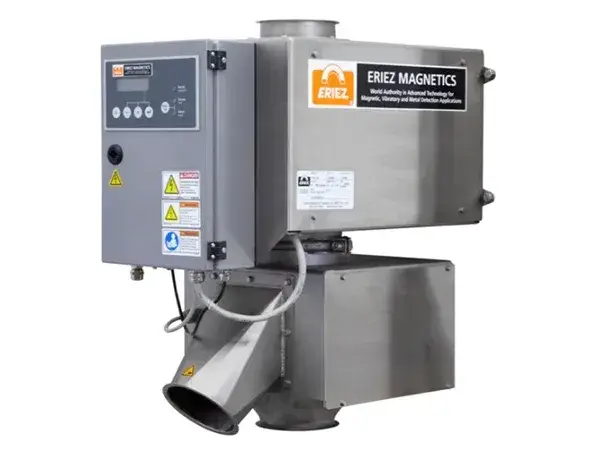
Detector
Metal Detector
A Metal Detector is an industrial inspection system used to identify ferrous, non-ferrous and stainless-steel metal contaminants in products or materials. It is suitable for applications across food processing, pharmaceuticals, packaging, textiles, plastics, mining and related production environments. By detecting unwanted metal before the product moves further through the process, it supports quality control, product protection and safer production operations.
For industries looking for Metal Detector Manufacturers in Chennai, the selection of the machine should be based on the material being inspected, production arrangement, required detection sensitivity, available installation space and the desired rejection method rather than price alone.
The Metal Detector is available with stainless-steel construction, including SS304 or SS316 options as specified for the application. Stainless steel provides a practical construction choice for industrial environments where durability, cleaning and hygiene are important considerations.
The detector can be supplied in different configurations depending on how the material moves through the production line. Conveyor arrangements are useful for products transported horizontally, while gravity or pipeline configurations can be considered for suitable free-flowing or process materials.
Detection width can be customized according to the application, with the product page indicating a range of 200 mm to 800 mm. The final construction and configuration should be selected after reviewing the product dimensions, material characteristics and production-line layout.
The basic operation of an industrial Metal Detector can be understood in a few steps:
The actual sensitivity achieved depends on factors such as product type, product size and operating conditions. Therefore, application-specific evaluation is important before finalizing the equipment.
Metal detection can be incorporated at different points in a manufacturing or material-handling process. In food processing, it can inspect packaged or processed products for unwanted metal particles before dispatch or further handling. In pharmaceutical production, metal detection can support contamination control for products such as tablets and capsules.
In packaging operations, the system can be positioned on a production line to inspect finished or partially processed products. Textile and plastic processing applications may use metal detection to identify metallic fragments that could affect product quality or potentially damage processing equipment.
Mining and recycling operations can also use suitable metal detection arrangements for identifying metallic material or protecting downstream equipment from unwanted metal. The correct detector configuration depends on the material, process flow and intended inspection point.
Relevant applications include:
An appropriately selected Metal Detector can provide several practical advantages:
Reliable metal detection depends on correct equipment selection, appropriate sensitivity settings, stable product presentation and regular maintenance. The product information specifies detection capability for ferrous, non-ferrous and stainless-steel metals, adjustable sensitivity and operating temperatures of 0°C to 50°C.
The specified electrical supply is 230V AC ±10%, 50Hz, while the available detection width is listed as 200 mm–800 mm and customizable. Reject options include air blast, pusher and diverter arrangements, depending on the selected configuration.
Regular cleaning, inspection and calibration are important for maintaining consistent operation. Product characteristics can also influence detection performance, so the final configuration should be confirmed against the actual application.
Before purchasing an industrial Metal Detector, buyers should provide clear information about the production process. Start with the material being inspected, including its physical form, size and characteristics. The product flow and required inspection point should then be evaluated.
The required detection width is another important consideration because it must correspond with the product path and equipment layout. Buyers should also determine whether the system will be installed on a conveyor, used in a gravity-feed arrangement or incorporated into a pipeline.
The desired rejection mechanism should be selected according to product movement and process requirements. Available options include air blast, pusher and diverter systems.
Operating conditions should also be discussed, including temperature, cleaning requirements and the available electrical supply. Where customization is required, information about line dimensions, product throughput and installation space should be provided before final equipment selection.
For current commercial details, the product page lists a starting price of ₹8,00,000, while the final price can vary according to specifications and configuration.
Established in 2011, Saksham Industrial Engineers provides industrial equipment, powder and bulk material handling solutions and technical consultancy. The company works with industrial customers requiring application-oriented equipment and customized solutions.
For Metal Detector requirements, Saksham Industrial Engineers provides configurations based on factors such as detection application, installation arrangement and operating requirements. Its product information also indicates technical and maintenance support, along with customization options.
Buyers can discuss their material, production-line arrangement, required detection width and rejection requirements with the company before selecting the appropriate configuration. This approach helps ensure that the proposed detector is matched to the actual industrial application instead of relying on a standard configuration alone.
Metal detection can often be considered alongside other material-handling and contamination-control equipment. Saksham Industrial Engineers also offers related solutions such as Magnetic Separator, Vibro Sieve Machine, Industrial Dust Filter, Screw Feeder and Vacuum Conveying System. Depending on the production process, these systems may form part of a broader material-handling, separation or process-control arrangement.
An industrial Metal Detector is an inspection system that uses electromagnetic detection to identify ferrous, non-ferrous and stainless-steel metal contaminants in products or materials.
The detector generates an electromagnetic field. When metallic material passes through the detection zone, it changes the electromagnetic response, allowing the system to identify the contamination and activate an alarm or rejection mechanism.
The system is designed to detect ferrous, non-ferrous and stainless-steel metals. Detection performance depends on the product and operating conditions.
They are used in applications such as food and beverage processing, pharmaceuticals, packaging, plastics, textiles, mining and recycling where metallic contamination needs to be identified.
Yes. The product is designed for integration into suitable existing production lines. Conveyor configuration, detection width and installation arrangement should be confirmed according to the existing layout.
Consider the material being inspected, product dimensions, detection width, production-line arrangement, operating conditions, required sensitivity, mounting configuration and preferred rejection mechanism.
Depending on the selected configuration, rejection can be provided through an air blast, pusher or diverter mechanism.
The product page currently lists a starting price of approximately ₹8,00,000. The final cost depends on the required specifications, configuration and customization.
Yes. Saksham Industrial Engineers indicates that customized solutions are available. Buyers should provide details such as material type, production-line layout, detection width and operating requirements for application-specific configuration.
There is no single manufacturer that is objectively best for every application. Saksham Industrial Engineers can be considered by buyers looking for Metal Detector solutions in Chennai, particularly when they require application-based configuration, customization and technical support.
Customer reviews
★ 0.0 (0 reviews)
Loading reviews...
Similar Picks