Delumper Manufacturers in Ghaziabad
A Delumper is designed for industrial applications where bulk materials can form lumps, agglomerates, or compacted masses during storage, handling, or processing. The machine breaks these unwanted lumps into smaller particles, helping material move more consistently through downstream equipment and conveying systems.
Saksham Industrial Engineers offers Delumper machines for applications where controlled lump breaking and de-agglomeration are required. The available product information specifies capacities from 100 kg/hr to 5 TPH, with construction options including SS304, SS316, and mild steel. Feed material can be up to 50 mm, while the stated output range is 2 mm to 20 mm adjustable.
For buyers searching for Delumper Manufacturers in Ghaziabad, selection should be based on the material characteristics, required capacity, desired output size, installation arrangement, and process conditions rather than machine name alone.
Key Features
- Heavy-duty construction: The machine is available with stainless steel or mild steel construction to suit different industrial requirements.
- Customizable rotor design: Rotor configurations can be selected according to the characteristics of the material being processed.
- Adjustable output size: The stated output range of 2 mm to 20 mm provides flexibility where different particle-size requirements are involved.
- Compact installation: Its compact design can help simplify installation where available plant space is limited.
- Easy maintenance: The machine incorporates a manual cleaning arrangement and a design intended to support maintenance and cleaning activities.
Construction & Design
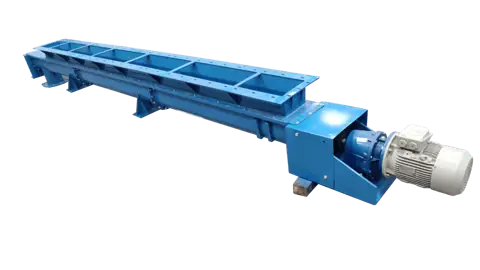
The Delumper is built around a robust crushing and lump-breaking arrangement. According to the available product information, the machine can be manufactured using SS304, SS316, or mild steel, depending on the application requirement. The mounting type is horizontal.
The working assembly uses rotating shafts fitted with blades or teeth. As the material enters the machine, the rotating elements act on the larger lumps and break them into smaller pieces. Rotor design can be customized for specific materials, making material characteristics an important consideration during machine selection.
The machine is also designed with a compact footprint and manual cleaning arrangement. For applications requiring hygienic handling, the stainless-steel construction options can be considered where appropriate.
Working Process
The operating sequence can be understood in four basic steps:
- Material feeding: Agglomerated or lumpy bulk material enters the Delumper through the designated feed arrangement.
- Lump engagement: Rotating shafts fitted with blades or teeth engage with the incoming material.
- Size reduction: The rotating elements break and de-agglomerate larger lumps into smaller particles.
- Material discharge: The reduced material exits the machine and can continue to the next stage of conveying, screening, mixing, or processing.
This process is particularly useful where compacted material could otherwise restrict material movement or create blockages in downstream handling equipment. The available product information states that the machine can be used with both dry and wet materials.
Industrial Applications
A Delumper is useful wherever bulk material develops unwanted lumps that need to be reduced before further processing or conveying.
In food and beverage processing, it can be used for materials such as sugar, salt, and other bulk powders that may become compacted during storage or handling.
In pharmaceutical processing, it can help break compacted powders and granules before subsequent processing stages.
For chemical manufacturing, the machine can be used for de-agglomerating chemical lumps to support smoother material handling.
In mining and mineral applications, it can assist with reducing larger or compacted material before further handling.
In plastic and polymer processing, it can be used for breaking down pellets and regrind materials where lump reduction is required.
Industries Served
The product is relevant to industries including:
- Food and beverage processing
- Pharmaceutical manufacturing
- Chemical processing
- Mining and minerals
- Plastic and polymer processing
- Bulk powder and material handling applications
The suitability of a particular machine configuration depends on the material and process requirements.
Key Benefits
A properly selected Delumper can provide several practical advantages in a bulk material handling line:
- Improved material flow: Breaking unwanted lumps can support smoother movement through conveying and processing equipment.
- Reduced blockage risk: De-agglomeration helps address lumps that may obstruct material pathways.
- More consistent particle handling: Controlled size reduction can make downstream material handling more uniform.
- Integration with conveying systems: The machine can be incorporated into existing bulk material handling arrangements where the process layout permits.
- Maintenance convenience: The quick-clean design and manual cleaning arrangement support routine cleaning and maintenance activities.
- Application flexibility: Different construction materials and customizable rotor designs allow the equipment to be considered for different material-handling requirements.
Performance & Reliability
Reliable Delumper operation depends on selecting the correct machine configuration for the material, feed condition, required throughput, and desired output size. Saksham Industrial Engineers specifies a capacity range of 100 kg/hr to 5 TPH, with feed size up to 50 mm and adjustable output from 2 mm to 20 mm.
Routine inspection, cleaning, and attention to the working components are important for maintaining dependable operation. The manufacturer's product information also states that its products undergo quality checks and are supplied with warranty coverage.
Buyer Selection Guide
Before purchasing a Delumper, industrial buyers should provide clear process information to the manufacturer. Important considerations include:
- Material type: Identify whether the material is a food powder, chemical, pharmaceutical product, mineral, plastic, polymer, or another bulk solid.
- Material condition: Explain whether the feed is dry, wet, compacted, agglomerated, or prone to forming lumps.
- Required capacity: Select the machine according to the required throughput, with the stated product range extending from 100 kg/hr to 5 TPH.
- Feed size: Confirm the incoming lump size, with the available specification stating up to 50 mm.
- Required output: Define the target particle size; the stated adjustable output range is 2 mm to 20 mm.
- Construction: Select SS304, SS316, or mild steel based on application and material-handling requirements.
- Plant layout: Check available installation space and the connection with upstream and downstream equipment.
- Cleaning requirements: Consider the cleaning method and hygiene requirements of the process.
Providing these details helps the manufacturer determine whether the standard configuration is suitable or whether a customized design is required.
Why Choose Saksham Industrial Engineers
Saksham Industrial Engineers has been associated with industrial material handling and processing solutions since 2011. Its product range includes equipment for conveying, feeding, unloading, screening, mixing, dust handling, and other bulk material handling requirements. The company also states that it works with global manufacturing partnerships and provides technical support for its solutions.
For Delumper requirements, the company provides different construction and design options and supports customization based on application and capacity requirements. Its product information also mentions installation, commissioning, and after-sales technical support.
Related Products
Depending on the material-handling process, a Delumper may be considered alongside other Saksham Industrial Engineers equipment such as:
- Lump Breaker – for applications requiring lump-breaking functionality.
- Rotary Airlock Valve – for controlled material discharge and feeding applications.
- Screw Conveyor – for conveying bulk materials between process stages.
- Bin Activator – for supporting material discharge from storage vessels.
- Vibro Sifter – where screening or separation is required after material handling.
These products can create useful equipment combinations depending on the complete process flow and plant requirements.