What is a Rotary Feeder used for?
A Rotary Feeder is used to control and discharge powders, granules and other dry bulk materials from hoppers, silos, bins or collection equipment while supporting pressure separation between connected sections.
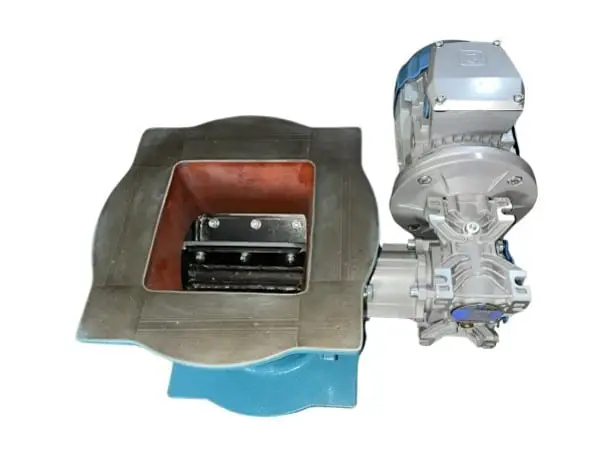
Rotary Airlock Valves
Rotary Feeder
Rotary Feeders are mechanical material-handling devices used to regulate and discharge powders, granules and other dry bulk materials from hoppers, silos, bins or process equipment. Their rotating rotor provides controlled material transfer while helping maintain pressure balance between connected sections. They are suitable for pneumatic conveying, dust collection and bulk material handling applications across food, cement, chemical, plastic and pharmaceutical industries.
Rotary Feeders are used where dry bulk material needs to move from one section of a process system to another in a controlled and continuous manner. The equipment is commonly installed below hoppers, silos, bins and similar storage or collection points before conveying, processing or dust-handling equipment.
A rotary feeder uses a rotating rotor with pockets or vanes to receive material at the inlet and discharge it at the outlet. At the same time, its airlock arrangement helps maintain pressure balance between connected areas. This makes the equipment useful in pneumatic conveying and dust collection systems where uncontrolled air movement can affect material transfer.
Saksham Industrial Engineers offers Rotary Feeders in different designs and configurations according to application requirements. The published product information identifies cast iron, mild steel and stainless steel construction options, rotor configurations including closed-end, open-end and adjustable-blade designs, and sizes up to 915 mm. Capacity is stated as up to 100 TPH, depending on the selected configuration.
For buyers searching for Rotary Feeders Manufacturers in Ghaziabad, selection should be based on the material, required flow rate, system conditions, construction material and installation arrangement rather than equipment name alone.
The basic construction consists of a housing, rotating rotor, rotor pockets or vanes, shaft arrangement, seals, bearings and drive arrangement. The exact construction is selected according to the material being handled and the operating conditions of the installation.
Saksham Industrial Engineers lists cast iron, mild steel and stainless steel as material-of-construction options. Rotor arrangements include closed-end, open-end and adjustable-blade types. Drive configurations listed for the product include chain drive and direct drive. Surface finishes include painted, powder-coated and polished stainless-steel options where applicable.
The feeder is designed to fit into a material-handling line so that material can enter through the upper opening, pass through the rotor pockets and leave through the lower discharge point. Proper selection of seals, rotor configuration and construction material is important for reliable operation.
The working process of a Rotary Feeder can be understood in five basic steps:
This continuous rotary action makes the feeder suitable for systems where regular discharge is required rather than intermittent manual feeding.
Rotary Feeders are particularly useful in systems handling powders, granules and dry bulk materials. They can be installed below storage equipment for controlled discharge or integrated with conveying and dust-control equipment.
In pneumatic conveying applications, the feeder can transfer material into the conveying line while helping maintain the required pressure separation. In dust collection systems, it can discharge collected material from filtration equipment without requiring manual removal.
The equipment can also be used where abrasive or fine materials require a mechanically controlled discharge arrangement. The actual feeder configuration should be selected after reviewing material characteristics, flow requirements and operating conditions.
The product information identifies applications across several industries, including:
A properly selected Rotary Feeder can provide a practical solution for controlled bulk-material discharge. Its rotating mechanism supports continuous transfer and can help reduce irregular feeding from storage equipment.
The airlock function is also useful where the feeder connects equipment operating under different pressure conditions. Consistent discharge can support smoother downstream operation, while durable construction and suitable seals can help reduce unnecessary maintenance.
For industrial buyers, another important advantage is configuration flexibility. The availability of different construction materials, rotor designs, sizes and drive arrangements makes it possible to select a feeder according to the specific process rather than relying on one standard configuration.
Reliable feeder performance depends on correct equipment selection and installation. Material characteristics, required capacity, pressure conditions, temperature, particle size, abrasiveness and desired discharge rate should all be considered before finalizing the design.
Saksham Industrial Engineers' published information highlights wear-resistant construction, durable seals and bearings, smooth material discharge and customizable sizes and designs as product characteristics. Regular inspection of the rotor, seals, bearings and drive system is important for maintaining dependable operation.
The listed product range includes sizes up to 915 mm and capacities up to 100 TPH; however, the appropriate capacity should be confirmed against the actual material and process conditions before ordering.
Before purchasing Rotary Feeders, an industrial buyer should provide the supplier with complete application information. Important selection factors include:
Providing these details helps Rotary Feeders Manufacturers determine a suitable configuration instead of supplying an incorrectly sized standard unit.
Saksham Industrial Engineers was established in 2011 and operates from Noida, providing equipment and consultancy for bulk powder handling applications. Its product range covers discharging, feeding, conveying, extraction, dosing and metering requirements. The company states that it works with global manufacturing partners and provides marketing, sales and service support for industrial solutions.
For Rotary Feeders, the company provides different construction materials, rotor configurations, sizes and drive arrangements. Its technical support can help buyers assess application requirements and select an appropriate configuration. This is particularly relevant when a feeder needs to be integrated with an existing pneumatic conveying, silo discharge or dust collection system.
Rotary Feeders may be used alongside other bulk powder handling equipment depending on the plant layout and process requirement. Relevant Saksham Industrial Engineers products include Rotary Airlock Valve, Rotary Vane Feeder, Screw Feeder, Vacuum Conveying System and Industrial Dust Filter. These products cover related feeding, airlock, conveying and dust-handling functions within bulk material systems.
A Rotary Feeder is used to control and discharge powders, granules and other dry bulk materials from hoppers, silos, bins or collection equipment while supporting pressure separation between connected sections.
Material enters the feeder through the inlet and fills pockets in a rotating rotor. The rotor carries the material toward the outlet, where it is discharged into downstream equipment. The rotor and housing arrangement also supports the airlock function.
They are commonly installed below hoppers, silos, bins and material collection equipment. They can also be integrated with pneumatic conveying and dust collection systems where controlled discharge is required.
A Rotary Feeder is used to control and discharge powders, granules and other dry bulk materials from hoppers, silos, bins or collection equipment while supporting pressure separation between connected sections.
Material enters the feeder through the inlet and fills pockets in a rotating rotor. The rotor carries the material toward the outlet, where it is discharged into downstream equipment. The rotor and housing arrangement also supports the airlock function.
They are commonly installed below hoppers, silos, bins and material collection equipment. They can also be integrated with pneumatic conveying and dust collection systems where controlled discharge is required.
Rotary Feeders are designed for dry bulk materials such as powders and granules. The exact construction and configuration should be selected according to material characteristics, including abrasiveness and flow behaviour.
Important factors include material type, required capacity, particle characteristics, operating pressure and temperature, feeder size, rotor configuration, construction material, drive arrangement and available installation space.
The published Saksham Industrial Engineers product information lists cast iron, mild steel and stainless steel as material-of-construction options. The suitable choice depends on the application and material being handled.
The published specifications list sizes up to 915 mm and capacity up to 100 TPH. Actual selection should be confirmed based on material properties and operating requirements rather than capacity alone.
Yes. Saksham Industrial Engineers states that Rotary Feeders are available in different sizes and designs, with options for construction material, rotor type and drive arrangement according to application requirements.
The terms are often used for similar equipment. A Rotary Feeder emphasizes controlled material feeding and discharge, while a Rotary Airlock Valve emphasizes maintaining an airlock between pressure zones. The appropriate terminology depends on the application.
There is no objective basis to declare one manufacturer universally “best.” Buyers should compare product configuration, application suitability, technical support, construction options and service capabilities. Saksham Industrial Engineers provides Rotary Feeders and bulk powder handling solutions, with technical support for selecting equipment according to industrial requirements.
Customer reviews
★ 0.0 (0 reviews)
Loading reviews...
Similar Picks