What is a loading bellow used for?
A loading bellow is used to transfer powders, granules and dry bulk solids from storage or discharge equipment into tankers, trucks, vessels or containers through a controlled loading path.
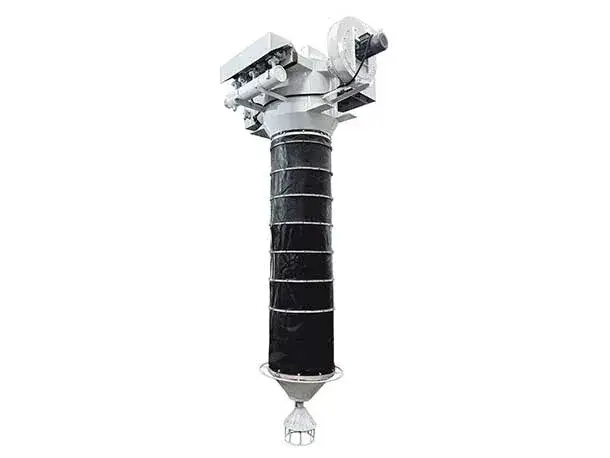
Loading Systems
Loading Bellow
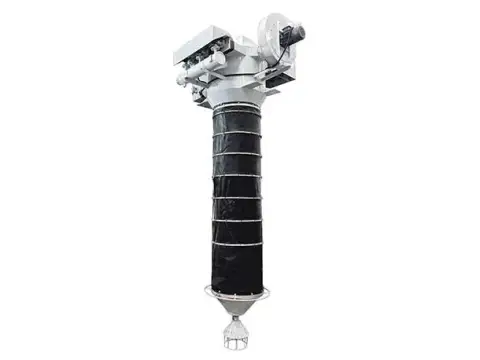
Loading Bellow is a flexible bulk-material loading system designed to transfer powders, granules and other dry bulk solids from storage equipment into tankers, trucks, vessels or containers while helping control dust and spillage. Its expandable and retractable design accommodates different loading heights, making it useful for cement, fly ash, grains, fertilizers, chemicals and minerals.
A loading bellow provides a controlled, flexible path for transferring dry bulk materials from a storage or discharge point into a receiving vehicle, vessel or container. It is particularly useful where conventional open discharge can create dust, spillage and difficult operating conditions.
Saksham Industrial Engineers offers loading bellow systems designed for bulk powder handling applications. The bellow can expand and retract according to the required loading height, helping maintain a practical connection between the discharge point and receiving equipment. Integrated filtration is provided for dust-controlled loading, while different operating arrangements can be selected according to the application.
For companies looking for Loading Bellow Manufacturers in Kanpur, the product is suitable for applications involving cement, fly ash, grains, fertilizers, chemicals and minerals.
The loading bellow combines a flexible fabric body with a reinforced construction to create an extendable material-transfer passage. Its basic design allows the loading spout to move vertically between the discharge point and receiving vehicle or container.
The product is available with Mild Steel or Stainless Steel construction, depending on the equipment arrangement and application requirements. The flexible section provides the necessary movement while the supporting structure maintains the intended loading configuration.
The design can also incorporate filtration, sensors and control arrangements where required. A PLC-based control system is available as an option, while the operating mode can be manual, semi-automatic or fully automatic.
Since material characteristics and plant layouts differ, the final construction should be selected according to the material being handled, required loading arrangement and operating conditions.
The loading process can be understood in a few simple steps:
This arrangement creates a more controlled loading point than an open material-discharge arrangement and helps reduce unnecessary material escape during transfer.
Loading bellows are used wherever dry bulk solids need to be transferred from storage equipment into transport or receiving units. In cement plants, they can be used for loading cement and fly ash into tankers. Grain and food-processing facilities can use them for controlled transfer of suitable dry bulk ingredients.
Chemical and fertilizer plants can use the equipment for loading compatible powders and granulated products. Mining and mineral-processing operations may also use loading bellows where dry minerals need to be transferred into vehicles or containers.
The exact configuration should be selected after considering the material properties, required loading capacity, available installation space and operating environment.
Relevant applications include:
A properly selected loading bellow can provide several practical advantages:
Loading bellow performance depends on factors such as material characteristics, loading capacity, spout dimensions, construction material, operating temperature and the selected operating arrangement.
The available product information specifies a capacity of up to 500 TPH, spout length up to 6 metres and operation up to 150°C. Mild Steel or Stainless Steel construction can be selected, while a three-phase power supply and optional PLC-based control are specified for applicable configurations.
Routine inspection and cleaning are important for maintaining the loading system. Particular attention should be given to the flexible fabric, discharge arrangement and filtration components, especially in applications involving abrasive or dusty materials.
Before selecting a loading bellow, buyers should provide clear information about the complete loading application. The material being handled is an important starting point because cement, fly ash, grains, chemicals and minerals can have different flow and handling characteristics.
Next, consider the required capacity, loading frequency and target receiving equipment. The available information specifies capacities up to 500 TPH, but the appropriate configuration should be confirmed for the actual material and process.
The loading height and available plant space should also be evaluated. A spout length of up to 6 metres is available, while the expandable design helps accommodate changing loading positions.
Other factors include the preferred Mild Steel or Stainless Steel construction, operating temperature, dust-control requirements and desired level of automation. Buyers should also determine whether manual, semi-automatic or fully automatic operation is appropriate. Providing these details allows the required configuration to be assessed before manufacturing or supply.
Saksham Industrial Engineers was established in 2011 and operates as a supplier and technical consultant for bulk powder-handling applications. The company's product range covers equipment for discharging, feeding, conveying, extracting, dosing and metering bulk materials.
For loading applications, Saksham Industrial Engineers provides loading bellows with different designs and operating options, along with customization based on size, material and required features. The company also provides technical and installation guidance for its equipment.
Its broader bulk-material-handling portfolio enables buyers to consider the loading bellow as part of a more complete material-handling arrangement rather than as an isolated component.
Depending on the plant process, a loading bellow may be used alongside other bulk-material-handling equipment from Saksham Industrial Engineers, such as:
A loading bellow is used to transfer powders, granules and dry bulk solids from storage or discharge equipment into tankers, trucks, vessels or containers through a controlled loading path.
The loading bellow provides an enclosed transfer path, while the specified integrated filtration system helps control dust generated during bulk-material loading.
Yes. Its flexible construction allows the bellow to expand and retract, helping accommodate different loading heights. The specified spout length can be up to 6 metres.
The available configuration is intended for powders, granules and bulk solids, including cement, fly ash, grains, fertilizers, chemicals and minerals. Material suitability should be confirmed for the specific application.
The loading bellow is available in manual, semi-automatic and fully automatic operating configurations. A PLC-based control system is also available as an option.
Consider the material type, required capacity, loading height, spout length, construction material, operating temperature, dust-control requirements, available space and desired level of automation.
The specified materials of construction are Mild Steel and Stainless Steel. The appropriate option depends on the application and operating conditions.
The product information specifies a capacity of up to 500 TPH. The suitable capacity for a particular installation should be confirmed according to the material and process requirements.
Yes. Saksham Industrial Engineers provides different designs and customization options for size, material and features, along with technical and installation guidance. Specific requirements should be discussed before ordering.
There is no single objectively “best” manufacturer for every application. Saksham Industrial Engineers is a relevant option for buyers seeking loading bellow solutions in Kanpur, particularly where bulk powder-handling expertise, different operating modes and application-specific configuration are required.
Customer reviews
★ 0.0 (0 reviews)
Loading reviews...
Similar Picks