3 Way Diverter Valve Manufacturers in Noida
A 3 Way Diverter Valve is designed for controlled routing of bulk solid materials through a conveying system. Its primary function is to change the direction of material flow between three connected ports, allowing material to move from one inlet toward either of two outlets, or in the reverse arrangement where the process requires it. This makes the valve useful where several silos, bins, mixers, conveying lines or process stations need to share a common material route.
Saksham Industrial Engineers provides 3 Way Diverter Valve solutions for powder and bulk material handling applications. The product is suitable for materials such as powders, granules and pellets and can be incorporated into pneumatic, gravity-fed and mechanical conveying arrangements.
Key Features
- Three-port flow routing: Enables material to be directed between interconnected conveying routes according to the plant layout and process requirement.
- Multiple operating options: The valve is available with manual, pneumatic or electric operation, allowing selection according to the required level of control and automation.
- Smooth internal flow path: The internal design is intended to reduce material retention and support smoother movement of bulk solids through the valve.
- Application-specific construction: Material and lining options can be selected according to the characteristics of the handled product and operating environment.
- Flexible installation: Flanged and customized mounting arrangements can be considered to suit existing conveying equipment and plant layouts.
Construction & Design
The construction of a 3 Way Diverter Valve is selected according to the material being conveyed and the operating conditions of the process. Saksham Industrial Engineers' product information identifies mild steel, SS 304 and SS 316 as material-of-construction options. Suitable lining options, including PU, ceramic and rubber, are also available for applications where material characteristics require additional consideration.
The valve incorporates an internal routing mechanism that changes the available flow path. Its design focuses on controlled material movement while limiting unnecessary material accumulation inside the body. Sealing and machining are important considerations where leakage, dust release or cross-contamination must be controlled.
Working Process
The operating principle is straightforward:
- Material enters the valve: Bulk material arrives through the connected inlet or conveying line.
- Flow path is selected: The internal rotating or sliding mechanism is positioned to establish the required route.
- Material is redirected: Depending on the selected position, the material travels toward the appropriate outlet.
- Process routing continues: The selected conveying line receives the material while the alternative route remains closed or isolated according to the valve configuration.
- Route can be changed: Manual, pneumatic or electric operation can be used to change the flow direction when required by the process.
This arrangement is particularly useful when one conveying source has to supply different destinations without installing separate conveying equipment for every route.
Industrial Applications
A 3 Way Diverter Valve is useful wherever dry bulk materials must be transferred between different process points. For example, a plant may use the valve to route material from a common conveying line toward different storage bins, mixers or downstream processing equipment.
In pneumatic conveying systems, it can be installed as a routing point between conveying lines. In gravity applications, it can help direct material toward the required discharge location. It can also be integrated into mechanical material-handling arrangements where the plant requires flexible routing of powders, granules or pellets.
Industries Served
Relevant applications include:
- Food processing
- Pharmaceutical processing
- Chemical processing
- Cement and building-material plants
- Mineral handling
- Plastic and polymer processing
- Power plants
- Agricultural and bulk-material processing
The appropriate construction, lining and operating arrangement should be selected according to the product characteristics and process conditions.
Key Benefits
The main value of a 3 Way Diverter Valve is its ability to provide controlled material routing without requiring a completely separate conveying route for every destination. It can help simplify bulk-material transfer arrangements and support better use of existing conveying infrastructure.
Other practical benefits include flexible operation, suitability for pneumatic and gravity systems, easier integration into automated processes when pneumatic or electric actuation is selected, and reduced material retention through a smoother internal flow path. The product information also identifies low maintenance requirements and suitability for fine and abrasive powders when appropriate material and lining selections are made.
Performance & Reliability
Reliable performance depends on selecting the valve according to the conveyed material, flow requirement, pressure, temperature, installation arrangement and operating frequency. Saksham Industrial Engineers lists applications for powders, granules and pellets and provides material options including MS, SS 304 and SS 316.
The available product information specifies a size range of 100 mm to 500 mm, working pressure up to 6 bar and temperatures up to 250°C depending on the material. These values should be treated as application-specific selection parameters rather than universal operating limits. The final configuration should be confirmed with Saksham Industrial Engineers before purchase.
Buyer Selection Guide
Before purchasing a 3 Way Diverter Valve, buyers should provide sufficient information about the conveying system. Important selection factors include:
- Type of material being handled
- Powder, granule or pellet characteristics
- Required flow capacity
- Existing pipe or chute size
- Pneumatic, gravity or mechanical conveying arrangement
- Operating pressure and temperature
- Abrasiveness of the material
- Required body material
- Requirement for PU, ceramic or rubber lining
- Manual, pneumatic or electric operation
- Available installation space and mounting orientation
For hygienic applications, the choice between MS and stainless-steel construction should be evaluated according to the process requirement. For abrasive materials, suitable lining and material selection should be discussed before finalizing the valve.
Why Choose Saksham Industrial Engineers
Saksham Industrial Engineers was established in 2011 and operates as a supplier and technical consultant for bulk powder handling applications. Its product portfolio covers equipment used for discharging, feeding, conveying, extracting, dosing and metering. The company also provides several related conveying and flow-control products, allowing buyers to discuss individual equipment requirements as part of a broader material-handling system.
For buyers looking for 3 Way Diverter Valve Manufacturers in Noida, the company can provide application-oriented consultation, product customization and technical support. Product information should be shared with the engineering team so that the appropriate size, material, lining, actuation and installation arrangement can be finalized.
Related Products
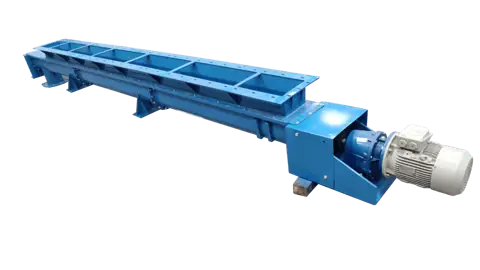
Depending on the material-handling arrangement, a 3 Way Diverter Valve may be used alongside a 2 Way Diverter Valve, 4 Way Diverter Valve, Rotary Airlock Valve, Screw Feeder or Vacuum Conveying System. These products are part of Saksham Industrial Engineers' bulk powder handling portfolio and may be relevant when designing or upgrading a complete conveying system.