What is a Paddle Level Sensor used for?
A Paddle Level Sensor is used for point-level detection of dry powders and granular solids in silos, hoppers, tanks, and similar bulk-material storage equipment.
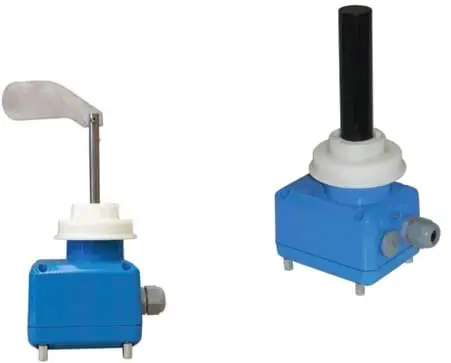
Level Sensor
Paddle Level Sensor
A Paddle Level Sensor is a mechanical level-detection device designed to monitor dry powders and granular materials in silos, hoppers, and tanks. Its rotating paddle detects material presence by sensing resistance and provides a switching signal for process control. It is useful for preventing overfilling or material shortage while supporting simple, practical level monitoring in bulk material handling systems.
A Paddle Level Sensor is used to detect the presence or absence of dry bulk material at a defined level inside silos, hoppers, bins, and tanks. It is particularly suitable for powdery and granular materials where dependable point-level detection is required for controlling filling, discharge, or material-handling operations.
The sensor operates through a motor-driven rotating paddle. When the paddle is free from material, it rotates normally. As material reaches the paddle, resistance increases and the rotation is interrupted, allowing the sensor to generate a switching signal for process control. This straightforward operating principle makes it suitable for applications where a simple point-level indication is preferred over continuous level measurement.
The Paddle Level Sensor consists of a housing, motor-driven rotating mechanism, paddle assembly, and electrical connection arrangement. The paddle is positioned inside the vessel at the level where material detection is required. The sensor housing protects the operating mechanism and provides the mounting arrangement needed for installation.
According to the available product information, the housing can be supplied in aluminum die-cast or stainless-steel construction, with cable gland or terminal-box connections. The product is available with top, side, or inclined mounting arrangements, allowing the installation to be selected according to the silo or hopper configuration.
The operating process is simple:
This makes the sensor useful as a high-level or low-level point detector rather than a continuous level measurement instrument.
Paddle Level Sensors are useful wherever dry solids need to be detected at a particular point within storage or process equipment. In a silo, for example, the sensor can indicate when stored material has reached the selected level. In a hopper, it can provide a signal when material falls below or rises to the sensor position, depending on the control arrangement.
They can also be incorporated into bulk powder handling systems where material availability needs to be monitored before starting or stopping related equipment. Their use is particularly relevant for powders, granules, and other dry bulk solids.
Based on the verified product information, relevant applications include:
The exact suitability should be confirmed against the material characteristics and operating conditions before selection.
A Paddle Level Sensor provides practical point-level detection without requiring a complicated measurement arrangement. Its mechanical sensing principle can help operators identify whether material has reached a predefined level and can support automated process control.
Key benefits include:
Reliable operation depends on selecting the sensor according to the material, installation position, vessel design, and operating environment. The available product information specifies a paddle rotation speed of 1 RPM, relay output with NO/NC contacts, 230V AC or 24V DC supply options, and IP65 enclosure protection. The listed housing options include aluminum die-cast and stainless steel.
Regular inspection should focus on the paddle, mounting arrangement, electrical connections, and accumulation of material or dust around the sensing area. Maintenance requirements should be established according to the actual plant environment and material being handled.
Before purchasing a Paddle Level Sensor, buyers should evaluate several application parameters. First, identify whether the material is dry, powdery, or granular and determine how it behaves during filling and discharge. Material characteristics can influence the suitability of the sensing arrangement.
Next, consider the vessel design and the desired detection point. Top, side, and inclined mounting options are available, so the mounting configuration should match the silo, hopper, or tank layout.
Electrical requirements should also be confirmed. The available product information lists 230V AC and 24V DC supply options with relay output. Buyers should verify the required voltage and output arrangement with their control panel or automation system before ordering. Housing material, environmental conditions, enclosure protection, and connection arrangement should also be reviewed.
If the application requires conditions or specifications beyond the verified product information, Information required before publishing.
Saksham Industrial Engineers has been associated with industrial equipment supply, bulk powder handling solutions, process automation, and technical consultancy since 2011. Its product portfolio includes equipment for conveying, feeding, dosing, screening, unloading, vibration, and other bulk-material handling requirements.
For buyers looking for Paddle Level Sensor Manufacturers in Vijayawada, the company can provide product information, customization guidance, and technical consultation according to the application. Buyers can discuss the material, vessel arrangement, mounting position, electrical requirement, and intended control function before finalizing the suitable configuration.
A Paddle Level Sensor can form part of a broader bulk-material handling system. Depending on the application, buyers may also consider a Silo Vent Filter for silo air filtration, a Bin Activator for improving material discharge, a Screw Feeder for controlled material feeding, or a Vibro Sifter for screening powders and granular materials. These products are part of Saksham Industrial Engineers' verified product range.
A Paddle Level Sensor is used for point-level detection of dry powders and granular solids in silos, hoppers, tanks, and similar bulk-material storage equipment.
A motor rotates the paddle when it is free from material. When the stored material reaches the paddle, resistance stops its rotation and the sensor changes its switching output for process control.
No. The verified product information specifies this sensor for dry and granular materials rather than liquid-level measurement.
The sensor can be installed in top, side, or inclined positions depending on the design of the silo, hopper, or tank and the required detection point.
It is designed for dry bulk materials, including powder and granular solids. Suitability should be confirmed according to the specific material characteristics and application.
The available product information specifies 230V AC or 24V DC supply options. The required configuration should be confirmed before ordering.
The listed configuration provides a relay output with NO/NC contacts, allowing the sensor to be connected with suitable process-control arrangements.
Consider the material type, vessel design, required detection level, mounting position, electrical supply, output requirements, environmental conditions, and housing material. These factors help determine the appropriate configuration.
The current product page lists a starting price of ₹6,000, inclusive of taxes. Actual pricing can vary according to the selected configuration and requirements.
There is no single manufacturer that can objectively be called the best for every application. Saksham Industrial Engineers is an established supplier and technical-consultancy provider offering Paddle Level Sensors along with a wider range of bulk powder handling and process automation equipment. Buyers should compare product suitability, technical requirements, support, and commercial terms before making a final decision.
Customer reviews
★ 0.0 (0 reviews)
Loading reviews...
Similar Picks