What is a Wall Putty Plant used for?
A Wall Putty Plant is used to manufacture wall putty by handling, feeding, weighing, mixing and packing powder-based ingredients such as white cement, polymers, mineral fillers and additives.
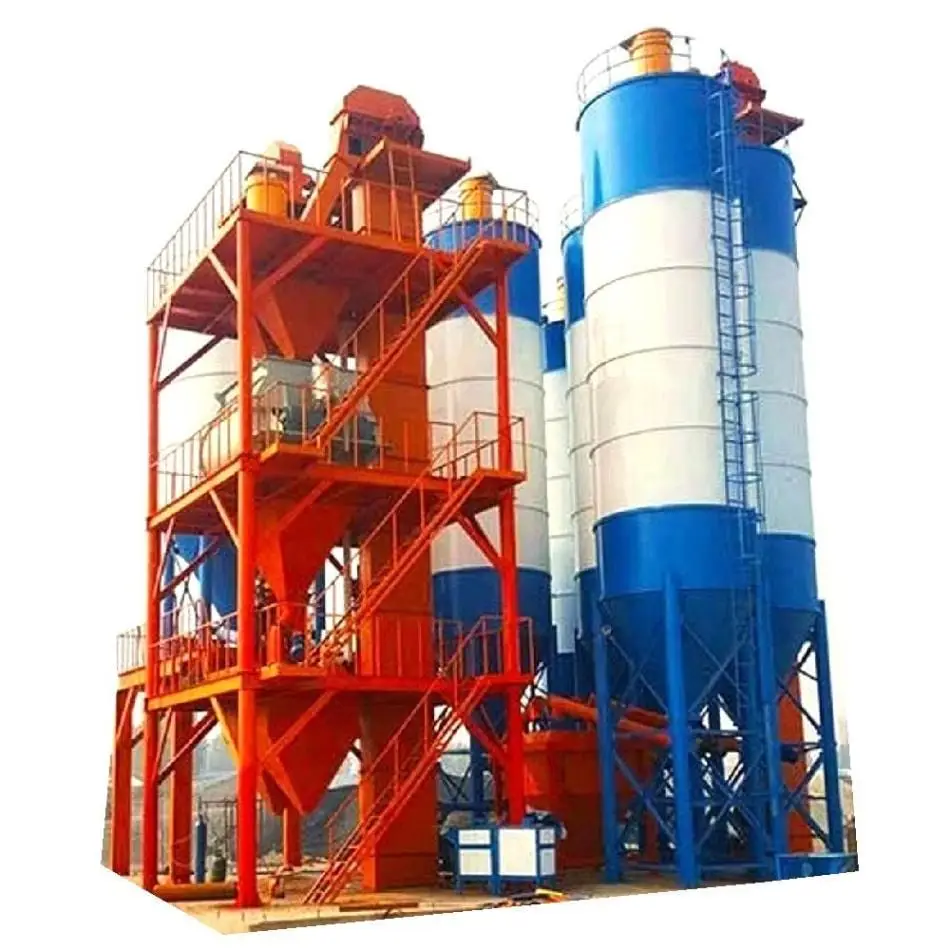
Putty Plant
Wall Putty Plant
A Wall Putty Plant is an industrial production system designed for consistent blending and processing of wall putty ingredients such as white cement, polymers, mineral fillers and additives. It supports controlled feeding, mixing and packaging for bulk production. The plant is suitable for construction and building-material applications where uniform wall putty quality and efficient powder handling are required.
For buyers looking for Wall Putty Plant Manufacturers in Vijayawada, the important consideration is not only the mixer but the complete material-handling arrangement, feeding method, weighing system, dust control, packaging configuration and available plant space.
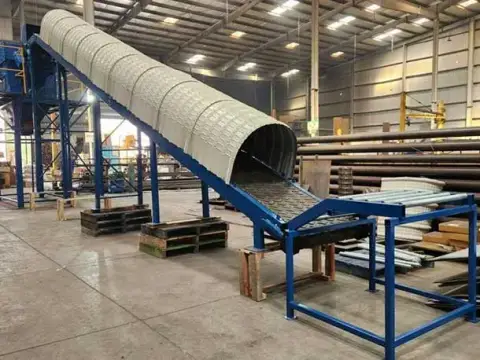
The plant is designed around the requirements of bulk powder processing. Its configuration can include a raw-material feeding arrangement, hopper, screw conveyor, weighing system, mixer, storage or handling section and packaging unit. The listed material-of-construction options include Mild Steel and Stainless Steel, depending on the model and application.
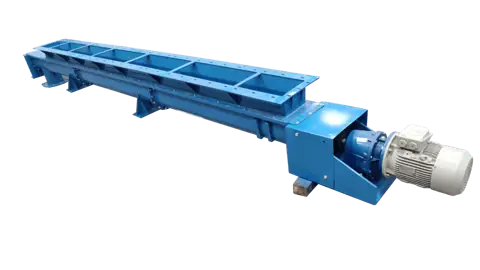
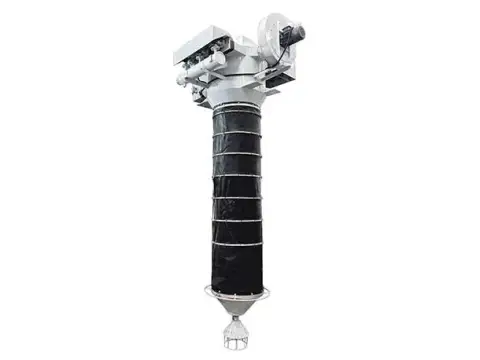
The mixing section may use a Ribbon Blender or Plough Shear Mixer. Material movement can be handled through screw conveying equipment, while dust collection is provided through an integrated pulse-jet dust collector. Packaging can be configured for valve bags or open-mouth bag filling.
Because plant requirements vary according to capacity, formulation, available space and operating method, the final design should be confirmed with the manufacturer before ordering.
The general working sequence of a wall putty production plant can be understood as follows:
1. Raw-material preparation:
Required ingredients such as white cement, polymers, mineral fillers and additives are prepared according to the selected formulation.
2. Feeding and weighing:
The materials are introduced into the feeding system. Hopper and screw conveyor arrangements move the powder toward the processing section, while weighing and feeding equipment can be used for controlled material handling.
3. Mixing:
The measured materials enter the mixing system. Depending on the plant configuration, a Ribbon Blender or Plough Shear Mixer is used to blend the ingredients into a consistent powder mixture.
4. Dust handling:
Powder movement and processing can generate airborne dust. The integrated dust-collection arrangement helps control dust during plant operation.
5. Product handling:
After mixing, the finished wall putty is transferred for further handling and packing.
6. Packaging:
The plant can incorporate valve-bag or open-mouth bag-filling arrangements, allowing the finished material to be prepared for storage, distribution or use.
The exact sequence, equipment arrangement and degree of automation depend on the final plant configuration selected for the application.
Wall putty produced through the plant is primarily used as a surface-preparation material before painting. It helps create a smoother wall or ceiling surface and provides a suitable base for subsequent finishing work.
The plant is therefore relevant for manufacturers supplying wall-finishing materials for residential buildings, commercial projects and industrial construction. It can also support building-material businesses producing different grades of wall putty according to their requirements.
The product is relevant to:
Saksham Industrial Engineers specifically identifies construction, chemical, minerals and powder-processing industries among the sectors it serves.
A properly selected wall putty plant can provide several practical advantages for a production facility. Controlled feeding and mixing help organize the handling of multiple powder ingredients. The available automation options can reduce dependence on manual intervention during suitable stages of operation.
The plant is also designed with dust-control provisions, which is particularly relevant when handling fine powder materials. Flexible plant configurations allow buyers to select an arrangement according to their production requirements, available layout and preferred operating method. The manufacturer also lists durable, low-maintenance construction and reduced raw-material wastage among the product benefits.
Plant performance depends on several factors, including raw-material characteristics, formulation, selected capacity, mixer configuration, feeding arrangement and operating conditions. Saksham's listed Wall Putty Plant range covers production capacities from 1 TPH to 20 TPH, with power requirements listed from 25 HP to 150 HP depending on the model.
The available configurations include semi-automatic and fully automatic operation, PLC-based or manual control, and Mild Steel or Stainless Steel construction. These details should be matched to the actual production requirement before finalizing the plant.
Before selecting a plant, buyers should clearly define the required production capacity and wall putty formulation. Capacity is particularly important because the listed range extends from 1 TPH to 20 TPH.
The buyer should also discuss:
These factors help ensure that the final plant configuration matches the actual manufacturing process rather than relying on a standard arrangement.
Established in 2011, Saksham Industrial Engineers is based in Noida and provides equipment and consultancy for bulk powder-handling applications. Its capabilities cover discharging, feeding, conveying, extracting, dosing and metering solutions, along with complete plant setups.
For wall putty production requirements, the company offers different plant designs and customization based on client requirements. Its product information also states that technical consultation and service support are available. Buyers can therefore discuss capacity, formulation, automation, material handling and plant configuration before finalizing the equipment.
Depending on the proposed plant layout and material-handling requirements, buyers may also evaluate related Saksham Industrial Engineers equipment such as Plough Shear Mixer, Screw Feeder, Horizontal Screw Conveyor, Vibro Sieve Machine and Industrial Dust Filter. These products are relevant to mixing, controlled powder feeding, conveying, screening and dust-handling requirements within powder-processing operations.
A Wall Putty Plant is used to manufacture wall putty by handling, feeding, weighing, mixing and packing powder-based ingredients such as white cement, polymers, mineral fillers and additives.
Saksham Industrial Engineers lists Wall Putty Plants with capacities from 1 TPH to 20 TPH, depending on the selected model and plant requirement.
The process generally involves feeding and weighing raw materials, conveying them to the mixer, blending the ingredients, handling the finished powder and finally packing it. The exact process arrangement depends on the plant configuration.
The listed mixing options include a Ribbon Blender or Plough Shear Mixer. The appropriate configuration depends on the formulation and production requirements.
Yes. Saksham Industrial Engineers lists both semi-automatic and fully automatic Wall Putty Plant configurations. The control system can also be PLC-based or manual depending on the selected model.
Buyers should consider production capacity, raw-material formulation, mixer type, feeding system, automation level, dust control, packaging requirements, available installation space, power requirement and material of construction before finalizing the plant.
Yes. The listed configuration includes packaging arrangements for valve bags or open-mouth bags. The exact packaging setup should be confirmed according to the buyer's requirement.
Yes. The specified plant configuration includes an integrated pulse-jet dust collector for dust handling during powder-processing operations.
Yes. Saksham Industrial Engineers states that customized solutions can be provided according to client requirements. Capacity, automation, plant arrangement and other configuration details should be discussed before finalization.
There is no single manufacturer that can be called the “best” for every application. Saksham Industrial Engineers is an option for buyers seeking Wall Putty Plant Manufacturers in Vijayawada, with plant configurations, customization, technical consultation and service support based on project requirements.
Customer reviews
★ 0.0 (0 reviews)
Loading reviews...
Similar Picks