What is a Horizontal Screw Conveyor?
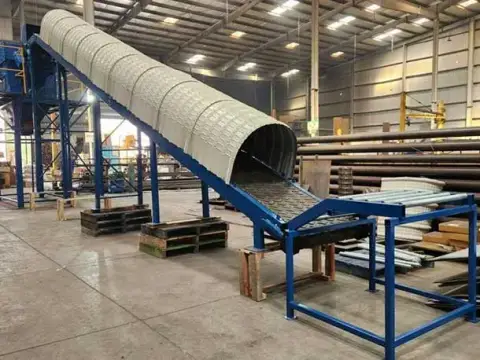
A Horizontal Screw Conveyor is a mechanical conveying system that uses a rotating helical screw to move powders, granules, pellets and other suitable bulk solids horizontally from an inlet to a discharge point.
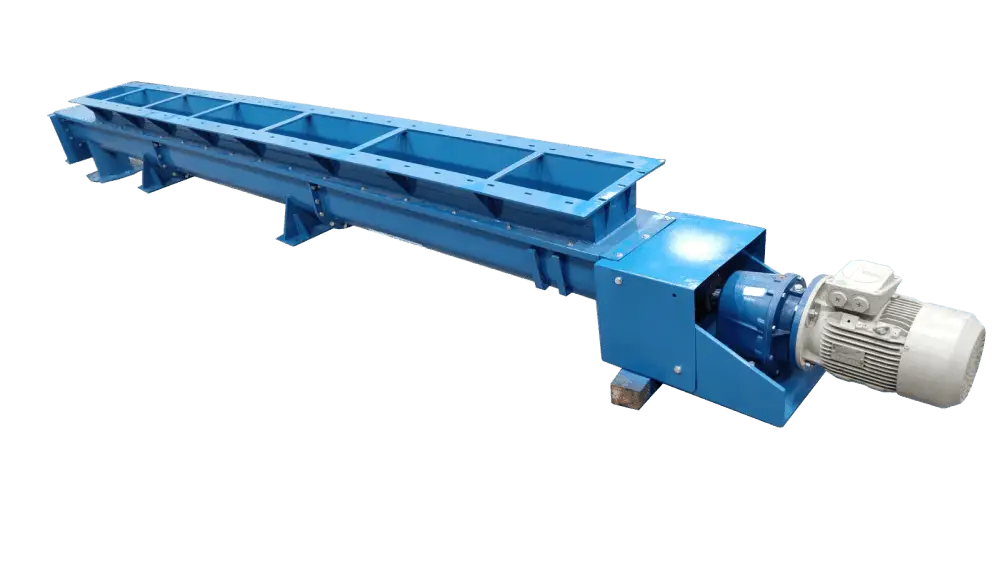
Screw Conveyors
Horizontal Screw Conveyor
Horizontal Screw Conveyor is a mechanical bulk-material handling system used to move powders, granules, pellets and other suitable solids continuously from one point to another. A rotating helical screw carries material through a trough or tube, making the equipment suitable for controlled transfer in food, pharmaceutical, chemical, cement, fertilizer and related processing applications.
A Horizontal Screw Conveyor is designed to transport bulk solid materials horizontally within an industrial process. It uses a rotating helical screw, commonly called an auger, to move material through a trough or enclosed tube from the feed point toward the discharge point.
This type of conveyor is useful when a plant needs a continuous and controlled method of transferring powders, granules, pellets and other suitable bulk materials between different stages of production. It can connect storage, feeding, processing and discharge points without relying on manual material movement.
For industrial buyers looking for Horizontal Screw Conveyor Manufacturers in Ahmedabad, Saksham Industrial Engineers provides equipment that can be configured around application requirements such as conveying length, screw diameter and required capacity.
A horizontal screw conveyor generally consists of a central screw shaft, helical flights, conveying trough or tube, bearings and a motorized drive arrangement. The screw assembly rotates inside the conveying section and pushes material toward the discharge point.
Saksham Industrial Engineers lists mild steel and stainless steel as construction options. The appropriate material depends on the product being conveyed and the requirements of the process. Stainless-steel construction can be considered for applications where hygiene and material compatibility are important.
The available screw diameter is listed from 100 mm to 600 mm, with lengths of up to 20 metres. Capacity is listed up to 130 TPH, depending on the selected configuration. These values should be treated as available product ranges rather than a guaranteed capacity for every application.
The conveyor can also be configured in different dimensions according to the plant layout and material-handling requirement.
The operating principle is simple and can be explained in five stages:
The actual movement rate depends on the machine configuration, screw dimensions, operating speed and characteristics of the material being conveyed.
Horizontal screw conveyors are used where bulk materials need to be transported across a plant without changing elevation. They can transfer material between hoppers, storage areas, mixers, processing equipment and discharge points.
In food processing, they can be used for suitable materials such as flour, sugar and spices. Pharmaceutical plants may use them for compatible powders and granules. Chemical processing applications can involve the movement of suitable powders and process materials.
In cement and construction-related operations, screw conveyors can transport materials such as cement, sand and fly ash. Fertilizer applications may involve products such as urea and compost, subject to suitable equipment configuration.
The conveyor is therefore useful as an intermediate material-transfer system within a larger production line.
The equipment is relevant to industries that routinely handle bulk powders, granules and pellets, including:
The construction and configuration should be selected according to the characteristics of the specific material and process.
A properly selected horizontal screw conveyor can provide several practical advantages for an industrial plant:
For applications involving precise dosing, the conveyor configuration and operating controls should be evaluated according to the required process accuracy rather than assuming every standard conveyor provides the same dosing performance.
Reliable operation depends heavily on selecting a conveyor that matches the material and duty requirements. Material properties, required throughput, conveying distance, screw dimensions, operating speed and construction material all influence equipment selection.
Saksham Industrial Engineers lists a robust construction, continuous material flow and motorized operation among the product characteristics. Routine inspection of the screw assembly, bearings, drive arrangement and conveying body can help identify wear or operating issues.
Maintenance requirements should be established according to the actual operating conditions and manufacturer recommendations. Abrasive, sticky or otherwise difficult materials may require specific design considerations before the equipment is selected.
Before purchasing a horizontal screw conveyor, procurement and engineering teams should provide the manufacturer with detailed process information.
Material type: Specify exactly what will be conveyed. Powder, granule, pellet, grain and other bulk materials can behave differently during conveying.
Required capacity: State the desired material throughput. This is important when determining suitable screw dimensions and operating conditions.
Conveying length: Provide the required distance between the feed and discharge points.
Installation arrangement: Share the available space, inlet position, outlet position and connection requirements.
Construction material: Determine whether mild steel or stainless steel is appropriate for the product and operating environment.
Material characteristics: Information about flow behaviour, abrasiveness, stickiness and other relevant properties can help determine whether a standard arrangement is suitable.
Downstream equipment: Explain what the conveyor will feed, such as a mixer, hopper, processing machine or packing system.
A clear application brief helps the manufacturer evaluate the required configuration rather than selecting equipment solely by size or price.
Saksham Industrial Engineers was established in 2011 and provides bulk powder-handling solutions and technical consultation. The company is based in Noida, Uttar Pradesh, and supplies material-handling equipment for industrial applications across India.
Its product range includes several screw-conveying and feeding solutions, allowing buyers to consider different approaches depending on whether the process requires horizontal, inclined, tubular or vertical material movement.
For buyers evaluating Horizontal Screw Conveyor Manufacturers, Saksham Industrial Engineers can discuss application requirements, construction options, dimensions and related material-handling equipment. The company also works with global manufacturing partners and provides technical support for its equipment range.
A horizontal conveying application may also require complementary equipment depending on the plant layout. Saksham Industrial Engineers offers Screw Feeder for controlled feeding applications, Inclined Screw Feeder where material must be transferred upward, Tubular Screw Conveyor for enclosed screw conveying, and U Trough Screw Conveyor for applications requiring a U-shaped trough arrangement.
Where the process requires a different conveying direction, Vertical Screw Conveyor is another related option. The appropriate product should be selected after reviewing the material, capacity, layout and process connection requirements.
A Horizontal Screw Conveyor is a mechanical conveying system that uses a rotating helical screw to move powders, granules, pellets and other suitable bulk solids horizontally from an inlet to a discharge point.
Material enters the conveyor through the feed point. A motor-driven screw rotates inside a trough or tube, and its helical flights push the material continuously toward the discharge end.
The equipment can handle suitable powders, granules and pellets. The existing product information also identifies grains, powders, pellets, sticky materials and abrasive materials as possible applications, subject to appropriate construction and design.
Saksham Industrial Engineers lists screw diameters from 100 mm to 600 mm, with customization available according to the application.
The listed equipment length is up to 20 metres. The practical length for a specific project should be determined according to capacity, material characteristics, installation arrangement and equipment configuration.
Yes. The product is listed with mild-steel and stainless-steel construction options. The appropriate construction should be selected according to the conveyed material and process requirements.
Start by determining the required material throughput and then provide the manufacturer with material characteristics, conveying length, available installation space and other process requirements. Capacity should be confirmed for the specific configuration rather than selected from a generic range.
Yes. It can be incorporated into a material-handling line connecting equipment such as hoppers, mixers, processing units and other material-transfer systems. Inlet and discharge dimensions should be matched with the connected equipment.
A buyer should provide the material type, required capacity, conveying length, inlet and outlet arrangement, construction preference, installation conditions and details of connected equipment. These details help the manufacturer determine a suitable configuration and prepare a project-specific quotation.
There is no objective basis for calling one supplier the “best” for every application. Saksham Industrial Engineers is an established bulk-material-handling equipment supplier and technical consultant that offers horizontal screw conveyors and related conveying solutions. Buyers can discuss their material, capacity, layout and construction requirements with the company before selecting the appropriate configuration.
Customer reviews
★ 0.0 (0 reviews)
Loading reviews...
Similar Picks