Loss in weight feeder Manufacturers in Ahmedabad
A Loss in weight feeder is designed for controlled and continuous feeding of powders, granules, pellets and other bulk solids where consistent material dosing is important. Instead of relying only on volume, the feeder monitors the reduction in material weight over time and uses this information to regulate the feed rate.
This approach makes the equipment suitable for processes where controlled material addition directly affects product consistency, formulation or production performance. Saksham Industrial Engineers offers loss-in-weight feeding solutions in Ahmedabad for applications requiring controlled dosing and integration with automated production systems. The product page identifies applications across food, chemical, plastic, pharmaceutical and construction-material processing.
For buyers searching for Loss in weight feeder Manufacturers in Ahmedabad, selection should be based on the material characteristics, required feeding capacity, process arrangement and automation requirements rather than on feeder size alone.
Key Features
- High-precision weighing system: Load-cell-based weighing monitors the material contained in the feeder and provides the measurement needed for gravimetric feeding.
- Real-time material flow monitoring: The system continuously observes weight loss over time to help maintain the required feed rate.
- PLC/HMI-based automation: The available control arrangement supports automated operation and process monitoring through PLC and HMI systems.
- VFD-controlled drive: Variable frequency drive control allows the feeding mechanism to be operated according to the required process conditions.
- Flexible material compatibility: The feeder can be used for powders, pellets, granules and other bulk solids, subject to application-specific suitability.
Construction & Design
The feeder is built around a material holding section, feeding mechanism, weighing arrangement, drive system and control system. The weighing section uses high-precision load cells to monitor the quantity of material in the feeder. As material is discharged, the control system observes the corresponding reduction in weight.
Material-contact construction can be provided in stainless steel or mild steel according to the requirement stated for the application. The drive arrangement uses VFD control, while PLC/HMI-based automation can be incorporated for controlled operation. The exact construction, dimensions and configuration should be selected according to material properties, required capacity and plant layout.
Working Process
The operation of a loss-in-weight feeding system can be understood in a few simple stages:
- Material loading: The feeder hopper or weighing container is filled with the material to be dosed.
- Weight measurement: Load cells continuously measure the weight of material held within the feeding unit.
- Controlled discharge: The feeding mechanism moves material toward the process outlet at a controlled rate.
- Weight-loss calculation: As material leaves the feeder, the control system monitors the reduction in total material weight over time.
- Feed-rate adjustment: The controller uses the measured weight-loss information to regulate the drive and maintain the required material flow.
- Continuous operation: The system continues monitoring and adjusting the feed rate while material is being supplied to the process.
This gravimetric operating principle is particularly useful when maintaining a consistent feed rate is important to the downstream process.
Industrial Applications
A loss-in-weight feeder is useful wherever controlled dosing of dry bulk materials is required. In food processing, it can be used for accurately feeding ingredients into mixing or production stages. Chemical processors can use controlled feeding for powders and additives where the material addition rate needs to remain consistent.
In plastics and polymer processing, the system can support controlled feeding of materials such as resins, pellets or colorants. Pharmaceutical manufacturing can use controlled feeding for suitable powdered ingredients or active materials, subject to the specific process and equipment requirements. Construction-material applications can include controlled dosing of cement and other powdered materials.
The feeder can therefore serve both continuous production processes and applications where controlled material addition is an important part of the formulation or processing sequence.
Industries Served
Relevant industries include:
- Food and beverage processing
- Chemical manufacturing and processing
- Plastics and polymer processing
- Pharmaceutical manufacturing
- Construction-material processing
The final feeder configuration should be selected according to the material and process conditions of the individual application.
Key Benefits
A properly selected gravimetric feeder can provide several practical benefits:
- Controlled material dosing: Weight-based monitoring provides a direct way to control material flow.
- Improved process consistency: A stable feed rate can help maintain consistency in downstream production.
- Reduced material wastage: Better control of material addition can help avoid unnecessary overfeeding.
- Lower manual intervention: Automated control reduces the need for frequent manual feed-rate adjustments.
- Production flexibility: The system can be used with different types of dry bulk materials when the application is suitable.
- Automation compatibility: PLC and HMI integration supports incorporation into automated process-control arrangements.
- Continuous feeding capability: The gravimetric principle is suitable for processes requiring ongoing controlled material flow.
- Maintenance practicality: The product information identifies the equipment as easy to clean and maintain, supporting routine plant operation.
Performance & Reliability
Feeder performance depends on several factors, including material flow characteristics, selected capacity, weighing-system performance, mechanical condition and control settings. The available product information specifies high-precision load cells, PLC/HMI-based automation and VFD-controlled operation.
The listed feeding capacity is 0.5 kg/hr to 10,000 kg/hr, with operating temperature stated up to 70°C. Material-contact construction is available in stainless steel or mild steel according to requirement. These figures should be considered during application engineering and confirmed for the exact configuration before purchase.
For dependable operation, buyers should also consider appropriate installation, calibration, material flow behaviour and routine maintenance. The manufacturer recommends regular calibration based on usage, with the existing product information indicating a typical interval of three to six months.
Buyer Selection Guide
Before purchasing a feeder, industrial buyers should provide clear process information to the manufacturer. Important considerations include:
- Material: Identify whether the material is powder, pellet, granule or another bulk solid.
- Required feed rate: Confirm the minimum, normal and maximum feeding requirements.
- Material behaviour: Consider flowability, particle size, bulk density and other characteristics that can affect feeding.
- Capacity: Select a suitable feeder capacity rather than relying only on hopper volume.
- Construction material: Determine whether mild steel or stainless steel is appropriate for the process.
- Plant layout: Check available installation space, inlet and outlet positions and access for cleaning or maintenance.
- Automation: Confirm PLC/HMI requirements and how the feeder will communicate with the existing process.
- Operating conditions: Review temperature and surrounding process conditions before finalizing the configuration.
- Integration: Consider the equipment that supplies material to the feeder and the downstream process receiving the controlled feed.
Providing these details helps Loss in weight feeder Manufacturers evaluate the application and recommend a configuration appropriate for the actual operating requirement.
Why Choose Saksham Industrial Engineers
Saksham Industrial Engineers is a Noida-based supplier and consultant focused on bulk powder handling solutions. The company states that it was established in 2011 and serves industries across India, with technical consultation and service support. Its product range includes feeding, conveying, screening, mixing, unloading and other bulk-material handling equipment.
For Ahmedabad-area requirements, Saksham Industrial Engineers can discuss application-specific feeder requirements, customization options and bulk pricing. The company’s product information also identifies technical consultation and after-sales support as part of its service offering.
Related Products
Depending on the material-handling arrangement, buyers may also need equipment that works alongside the feeder. Relevant Saksham Industrial Engineers products include:
- Micro Batch Feeder – useful where controlled batch feeding is required.
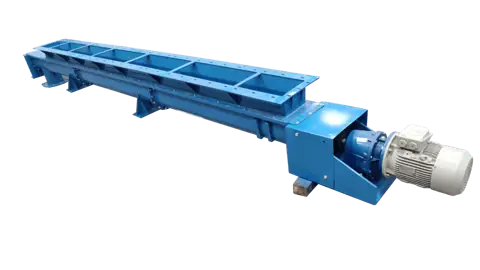
- Screw Feeder – suitable for controlled movement and feeding of bulk materials.
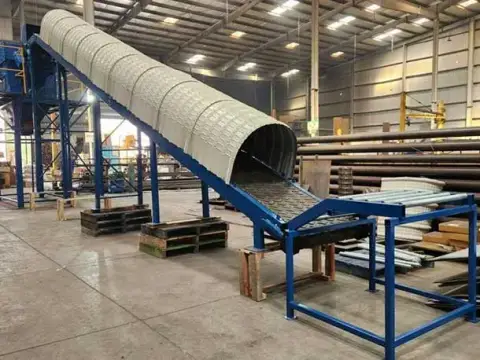
- Inclined Screw Feeder – useful where feeding involves an inclined conveying arrangement.
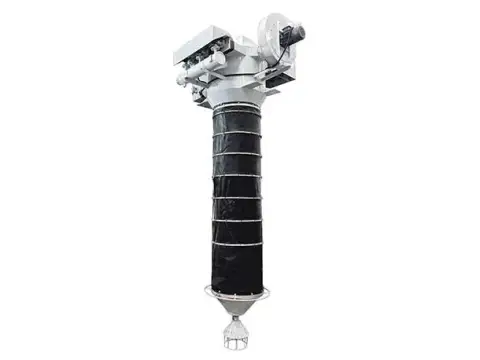
- Big Bag Discharge Station – relevant when bulk material is supplied in large flexible bags.
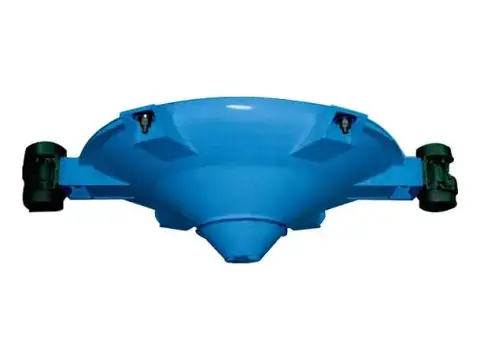
- Bin Activator – useful as part of a bulk-material discharge arrangement.
These products can be considered according to the upstream material supply system, feeding requirement and overall plant layout.